Subjects
Art
At Cullercoats Primary School, art is a crucial part of our children's personal and creative development.
I believe that art fosters essential lifelong skills such as creativity, self-expression, and critical thinking. Through art, children develop their ability to observe the world around them, make connections, and communicate their ideas visually. These skills are invaluable, not just in art, but across all areas of life. Our curriculum offers rich and diverse opportunities for children to explore various mediums, from drawing and painting to sculpture, textiles and digital art. The children also benefit from experiences such as visiting galleries, collaborating with local artists, and promoting and celebrating their local heritage in our Heritage Week, all of which deepen their understanding of art in the world around them. Art opens doors to new ways of thinking and empowers children to express themselves confidently, making it an integral part of their education and personal growth at Cullercoats Primary.
Subject Lead - Mr Jonny Reed
INTENT
At Cullercoats Primary School we offer our children a broad, balanced and bespoke skills-based Art experience where children are valued and encouraged to grow and develop their artistic and creative abilities from the very start of their holistic education journey. This begins with an experimental and exploratory focus in EYFS followed by progressive Art skills development and refinement year on year through to Year 6.
We draw inspiration from our immediate local and regional landscape and artistic heritage, from Winslow Homer and the Cullercoats Artists’ Colony through to collaborating with local artist Joanne Wishart. We also visit local Art venues such as the Laing art gallery and collaborate with experts who provide both hands-on workshops and gallery experiences for our pupils.
We are constantly looking to add innovative new Art experiences which will excite and enrich our children’s own individual creative learning experiences and artistic development and which in turn also inspire and enthuse our staff and their subsequent Arts delivery.
IMPLEMENTATION
Skills and content
Each half-termly block covers one of six specific Art Skills areas- Drawing, Painting, Sculpture, Collage, Printing, Textiles and Mixed Media. Teachers take inspiration a variety of well renowned artists from all over the world, explore their interesting lives, the impact they made and focus on the techniques and skills that they gave rise to. The children also begin to explore elements such as Line, Shape and Form, Tone, Colour, Texture and Space.
Coverage and skills development
Each unit is always linked to at least one named and relevant professional artist in that field, with scope for teachers to always adapt, add to and evolve our Art curriculum for continuous refinement. Clear and simple Art curriculum overviews create awareness of where each year-group’s skills coverage and content feed into our whole-school Art skills development which is built upon year on year.
Creative learning
Our children are given opportunities to experiment and learn, make positive individual choices and engage in creative risk-taking to express themselves, explore new media and to experience different materials and creative applications in Art. Our children are encouraged to explore, practice and refine key artistic techniques to build skills, proficiency, individuality and confidence in their own creative abilities as they grow.
Art is inclusive and offers unique differentiated outcomes from common starting points and solid skills-based teaching. Our teaching of Art is underpinned by Rosenshine’s Principles of Instruction, ensuring that learning is broken into small steps, supported by regular review, explicit modelling, guided practice, regular checking for understanding, and opportunities for independent practice.
IMPACT
Our aim is to support and encourage our pupils to become confident young artists with a range of artistic skills, creative confidence and individuality of style.
Our pupils enjoy individual freedom of creative expression, having time and space to experiment, taking time to try out new media and to refine their techniques and application of skills to produce a range of rewarding high-quality artwork of their own to keep and display.
Art Appreciation
Over time they develop a growing appreciation of Art and knowledge of the works of a variety of local and world-renowned artists and movements through each linked Art skills unit. We also encourage use of simple specialist Art vocabulary to enable them to articulate what they are creating in Art, to help explain how they are making it and to express their choices and ways of working appropriately.
Display
Children’s artwork is displayed in and around school to celebrate their creativity and to encourage all children to produce high-quality artwork to the best of their individual abilities. Also to see how they can each contribute to a visually positive and attractive learning environment. We will develop our skills and display our work in books and celebrate it on the Seesaw App.
We also display our work in a bespoke gallery during our Heritage week where parents are welcomed into school to visit and help celebrate the hard work that the children have put in. This helps to further instil a sense of pride in our work and our local area.
Evidence of skills progression
Evidence of high-quality work in can be seen in our books and displays and on the Seesaw app, demonstrating pupils’ increasingly secure and deepening understanding of the projects and processes. Our pupil voice shows that children enjoy art and are positively engaged in their learning. Progress is consistent across all year groups, reflecting effective teaching and a well-structured curriculum.
At the end of each year children are assessed against the skills and understanding they have developed through the year.
Our young artists receive a broad and varied creative Art curriculum experience at Cullercoats which is a solid foundation for future learning and creative enjoyment for life.
SKILLS MAPPING DOCUMENTS
Computing
At Cullercoats Primary School, Computing plays a vital role in preparing children for the world they are growing up in.
Through our rich and engaging Computing curriculum, pupils develop essential life skills such as problem‑solving, logical thinking, resilience, teamwork and digital literacy. They learn not only how technology works but also how to be responsible online citizens who can adapt to new challenges in an ever‑changing digital world. Children learn using a wide range of technology, including iPads, Chromebooks, micro, LEGO Spike Primes and Crumbles. Alongside classroom learning, we enhance pupils’ experiences through a wide range of opportunities, including our annual entry into the First Lego League competition, a thriving coding club, and regular cross‑curricular projects that allow children to use technology to bring their ideas to life. As someone who studied Computing at university and has always had a passion for technology, I believe in giving every child the confidence and creativity to use digital tools safely and effectively. Our goal is to ensure every child leaves our school empowered, curious and excited by the endless possibilities technology can offer them.
Subject Lead - Mrs Wendy Parr
INTENT
At Cullercoats Primary School, our computing vision is straightforward yet powerful: our children should be online-safe, online-competent, and online-confident. We believe that computing is not a standalone subject - it's an essential part of daily life and a foundation for future success in a technology-rich world.
We aim to equip every child with the skills, creativity and enthusiasm they need to thrive in a rapidly changing digital landscape. Through our computing curriculum, we help learners to:
-
Think critically and solve problems with computational approaches;
-
Communicate and collaborate using digital tools;
-
Design and create with technology;
-
Understand online risks and act responsibly and safely.
By building confidence, not just competence, we prepare our children to be adaptive, resilient, and proactive users of technology - ready for whatever their futures may hold.
IMPLEMENTATION
At Cullercoats Primary School, our children have frequent and meaningful opportunities to use technology, building their skills progressively throughout their school journey. Our aim is to ensure that every child develops the knowledge and confidence they need for 21st-century lifestyles.
Our computing curriculum follows the Teach ICT North Tyneside Scheme of Work. These tried-and-tested units, developed by North Tyneside’s subject specialist advisors, provide teachers with clear guidance and make teaching computing both easy for staff and exciting and engaging for students.
Computing is integrated across the curriculum, enhancing learning in all subjects while also supporting motivation, creativity, and the development of social skills. We prioritise the use of up-to-date resources and emerging technologies, enabling children to explore, experiment, and solve problems in meaningful contexts.
Our computing curriculum is carefully sequenced so that skills and knowledge build year on year:
-
Nursery & Reception: Children interact with iPads and touchscreens for early literacy, phonics, and numeracy games, introducing them to technology in safe, playful ways.
-
Key Stage 1: Children follow structured units covering digital sound, multimedia stories, algorithms, digital art, programming directional instructions, word processing, and animation, with most activities supported by Purple Mash software. For programming, children also use Scratch JR and LOGO, developing logical thinking and problem-solving skills in a hands-on, engaging way.
-
Key Stage 2: Children progress to more advanced computing and digital creation, including email communication, building websites, databases, spreadsheets (using the Google Suite), Scratch, Kodu, Crumble kits, LEGO Robotics, and micro:bits. They also develop creative skills through photo editing and creating instructional videos using iMovie.
Resources and Technology
To support our computing curriculum, we provide a wide range of devices, software and resources:
-
Class sets of iPads, Chromebooks and Netbooks are available for all pupils.
-
Each classroom has a networked PC linked to a Promethean panel for interactive lessons.
-
iPads are available to support children with additional needs.
-
Purple Mash an interactive educational platform used to teach computing concepts, coding, and digital creativity, particularly in Key Stage 1.
We work closely with the North Tyneside Computing and IT Curriculum Support Team, who provide extensive guidance and partner with us to support the delivery of high-quality computing lessons. Their expertise helps ensure our curriculum is up to date, engaging and effectively meets the needs of all pupils.
All devices are connected to the school broadband, enabling safe, effective use of the Internet.
Online Safety
At Cullercoats Primary School, online safety is a priority and is embedded across the curriculum. In the first half term of each new school year, all year groups focus specifically on online safety lessons using Common Sense Education resources, ensuring children understand the risks, responsibilities, and best practices for using digital technology.
In Key Stage 2, children also take part in Google’s Be Internet Legends live assemblies throughout the year, which provide interactive, age-appropriate guidance on protecting personal information, responding to online risks, recognizing trustworthy content, and communicating safely and responsibly online.
We also celebrate Safer Internet Day annually, reinforcing key messages and engaging the whole school community in safe and responsible use of technology.
These initiatives, combined with structured lessons, assemblies and ongoing classroom discussions, ensure that every child learns to navigate the digital world safely, confidently and respectfully. Children are also taught where to seek help and know that no one should feel threatened or unsafe online, whether at school or at home.
Enrichment and Extra-Curricular Activities
Each year, a team of Year 6 pupils takes part in the FIRST® LEGO® League Challenge competition, giving children the chance to apply their computing and problem-solving skills in a competitive, real-world context while developing teamwork, creativity and resilience.
Our after-school coding club for Lower Key Stage 2 pupils, run in collaboration with The Kids Hub, allows children to explore coding projects and creative digital activities in a fun, hands-on environment.
Pedagogical Approach & Rosenshine’s Principles
Our teaching in computing is informed by research-based principles of effective instruction:
-
Modelling & Think-Alouds: Teachers demonstrate software, coding processes, and problem-solving strategies (Rosenshine, 2012 – Principle 1: Daily Review / Principle 4: Modelling).
-
Scaffolding & Guided Practice: Children are supported through step-by-step tasks before attempting independent work (Principle 6: Guided Practice).
-
Check for Understanding: Ongoing assessment ensures children can progress confidently (Principle 7: Check for Understanding).
-
Independent Practice & Cumulative Review: Skills are consolidated over time with projects, competitions, and cross-curricular applications (Principle 8: Independent Practice / Principle 10: Review).
By embedding these principles, we ensure that computing lessons are structured, clear, and engaging and that all children are supported to succeed and progress confidently.
IMPACT
The impact of our Computing Curriculum is evident in both children’s digital work and in their confidence and competence when using technology. Evidence can be gathered through reviewing individual accounts, observing learning in classrooms and examining work stored in platforms such as Google Drive and SeeSaw. Discussions with children themselves (pupil voice) provide additional insight into their understanding and engagement with computing.
Our curriculum ensures that, by the time children leave Cullercoats Primary School, they are confident, competent and safe users of ICT, with a clear understanding of how technology
works. Children develop the ability to express themselves creatively using digital media, solve problems using computational thinking and apply their skills across a range of subjects and real-world contexts.
We continuously strive to enrich our computing provision, for example through our highly successful LEGO Robotics programme, which has led to multiple national finals and even an international final, making us the only North East primary school to reach this stage. Such achievements demonstrate the real-world impact of our curriculum and the high level of skill, creativity and perseverance our pupils develop.
The impact and progress of our computing curriculum are measured through ongoing formative and summative assessment, regular discussions with children about their learning and the review of digital work. This ensures that knowledge and skills are retained and built upon over time, in line with research-informed teaching principles, such as Rosenshine’s emphasis on cumulative review, guided practice, and checking for understanding.
SKILLS MAPPING DOCUMENTS
Design and Technology (DT)
At Cullercoats Primary School, Design and Technology (D&T) plays a crucial role in shaping our students’ creativity, problem-solving skills, and resilience, preparing them for the challenges of the future.
As the Design and Technology lead, I’m passionate about the subject because it fosters a hands-on, real-world learning approach that encourages children to think critically, collaborate, and innovate. Through D&T, children develop valuable lifelong skills such as creativity, perseverance, and the ability to evaluate and improve their own work. The subject allows students to explore a wide range of materials and tools, offering enhanced experiences such as working on practical projects, collaborating with peers and teachers, and engaging with technology that can inspire future careers. These experiences not only build confidence but also make learning relevant to the world around them. I believe D&T provides a foundation for children to become adaptable, independent thinkers with a genuine enthusiasm for lifelong learning, and it’s an essential part of our curriculum at Cullercoats Primary School.
Subject Lead - Mr Jonny Reed
INTENT
At Cullercoats Primary School we offer all our children a wide breadth of creative experiences and provide opportunities to develop a range of valuable, lifelong skills. The children are taught to critically design effective products for specific users. We use appropriate tools safely and effectively. In all areas of Design and Technology projects the children are encouraged to consider the effectiveness of their designs at all stages of the process and consider the requirements of the product in relation to who they are designing for. Every child will have the opportunity to learn and extend their understanding, experience and application in the use of technology in a variety of situations. We make good use of our plentiful school garden, greenhouse and expansive orchard to support (and supply where possible ingredients for) the food technology aspects of the curriculum which also have great cross curricular links to science and healthy living.
IMPLEMENTATION
There are five strands to the Cullercoats Design and Technology curriculum: Mechanisms, Textiles, Structures, Electrical Systems and Food Technology. Every phase of the school teaches each one of these strands, building on the techniques and strategies from the previous phase and developing skills in each of these areas. In each phase the designing and evaluating will become more thorough and the use of tools will advance in complexity. As they move through the school children will be given greater opportunity to use C.A.D, Computer Aided Design, through programs such as Google Sketchup, Purple Mash, Tinkercad and Lego Spike Prime. They will be given opportunities to explore processes in their local environment, making excellent use of our nursery planters, school garden, greenhouse, vegetable beds and apple orchard. Pupils may also extend their knowledge of a history or geography topic or a Talk4Writing text through Design and Technology lessons. Our locality enables the school to draw upon a wide variety of DT examples. Structures such as the Swing, Tyne and Millennium Bridges, along with local parks and relevant coastal structures give us much scope to explore DT in the world around us.
Our teaching of Design and Technology is underpinned by Rosenshine’s Principles of Instruction, ensuring that learning is broken into small steps, supported by regular review, explicit modelling, guided practice, regular checking for understanding, and opportunities for independent practice and design.
IMPACT
Pupils will have an understanding and an appreciation of the design process. They will have experienced working iteratively and have a desire to improve on what they have produced. Through our Design and Technology curriculum pupils will have built up strong independent and interpersonal skills such as perseverance, team working and have a strong sense of pride in their work and capabilities. Pupils will be able to express themselves creatively and with a strong technological vocabulary. Through the use of increasingly complex tools, including ICT, pupils will have safely developed useful, valuable, lifelong skills and be ready for the secondary school curriculum. We measure the impact and progress of our Design and Technology curriculum through continual summative assessment and discussions with children about their learning. We use book monitoring and Seesaw to celebrate work.
One of the ways in which the impact of our Design and Technology curriculum can be seen is through our hugely successful Lego Robotics programme, which has led to us national finals on numerous occasions and even a National Award for Core Values in February 2020; (we are so far the only North East primary school to ever reach this stage).
SKILLS MAPPING DOCUMENTS
English (Overview)
Why English Matters to Us
As the English Team, we each bring personal experiences that shape our passion for the subject. One of us grew up with a mum who was a librarian, filling childhood with stories and sparking a lifelong love of books. Another studied languages at university, developing a deep understanding of communication and a real passion for grammar—recognising how structure, vocabulary and expression shape the way we connect with others. One team member discovered their voice through the performing arts, learning the power of expression and storytelling, while another has written professionally for newspapers, relying on clear, accurate and purposeful writing every day.
Together, these experiences show us just how vital English skills are. Phonics and reading open doors to knowledge and imagination; writing enables children to express themselves clearly; oracy builds confidence and communication; and handwriting and spelling provide the foundations for fluent, accurate work. Together, these skills help our pupils thrive, belong and achieve. We know from our own lives how transformative English can be and we are committed to nurturing that same love of language in every child.
Subject Leads - Miss Laura Linden (KS1) and Mrs Kat Robison (KS2) PHONICS LEAD - MS JEN MCCALL
READING LEAD - MRS SARAH WALLACE
ORACY LEADS - MISS LAURA LINDEN AND MRS LAURA FELL
SKILLS MAPPING DOCUMENTS
English (Reading)
INTENT
At Cullercoats Primary School, our intent is to ensure every child becomes a confident, fluent reader who enjoys reading and understands its value for learning and life. We aim to create a culture where reading is celebrated and embedded across the curriculum. Our approach builds strong foundations in phonics and fluency in EYFS and KS1, then develops comprehension and critical thinking through exposure to high-quality, ambitious texts in KS2. By the end of Year 6, pupils will:
· Read fluently and with expression across a range of genres.
· Apply comprehension strategies to infer, analyse, and evaluate texts.
· Draw on a rich literary background to inspire writing and creativity.
· Continue their journey as lifelong readers who read for pleasure and purpose.
IMPLEMENTATION
Our reading curriculum is structured and progressive:
Early Reading and Phonics
· Daily phonics lessons in EYFS and KS1 follow Floppy’s Phonics, a systematic synthetic phonics programme. Lessons include reviewing prior sounds, introducing new material in small steps, and practising blending and segmenting.
· Children progress through six phonics phases, from Phase 1 in Nursery to Phase 6 by Year 2.
Transition to KS2
· Whole-class phonics continues in Year 3 to secure foundations before moving to comprehension-focused sessions. Targeted interventions support pupils who need additional help.
Developing Fluency and Comprehension
· In KS2, pupils transition from “learning to read” to “reading to learn.” Whole-class reading sessions immerse all pupils in high-quality texts, promoting discussion and reasoning. Mixed-attainment pairs and group talk ensure inclusive participation.
Reading Schemes and Home-School Links
· EYFS and KS1 use Oxford Reading Tree and complementary schemes such as Bug Club and Heinemann, organised by Book Bands. KS2 continues with Oxford Reading Tree, Rising Stars, and free-choice books.
· Parents are engaged through home reading books, reading challenges, and events like the Read for Good Readathon.
Reading for Pleasure
· We celebrate reading through book clubs, library visits, author workshops, World Book Day, National Storytelling Week, and regular reading challenges. Our classrooms and outdoor spaces are vocabulary-rich environments with books linked to topics and interests.
Rosenshine’s Principles in Practice
· Begin lessons with a short review of previous learning.
· Present new material in small, manageable steps.
· Model fluent reading and comprehension strategies.
· Use questioning to check understanding and deepen thinking.
· Guide practice through paired and group discussion before independent tasks
IMPACT
Through this approach, pupils:
· Achieve strong outcomes in statutory assessments and demonstrate progress in phonics, fluency, and comprehension.
· Read confidently and apply skills across the curriculum.
· Show enthusiasm for reading, evidenced by participation in reading events and independent book choices.
· Benefit from strong home-school partnerships that reinforce reading beyond the classroom.
Book Recommendations
We’re passionate about books and reading and hope you enjoy the beautiful stories we have chosen for you. Have a browse and you’ll find all sorts of books from magical adventures to inspiring individuals to stories set in different cultures – there’s something for everybody!

So many fabulous book recommendations here for each year group.
You can also find lists of “If you loved this book, you might like these…” plus recommended poetry, graphic novels, picture books and non-fiction. Keep popping back to this great website as there are also monthly recommendations.
Please click here to visit The Reader Teacher website

Hundreds of great non-fiction recommendations, organised by topic and subject.
Everything is here from Maths and Minibeasts to Transport to Tudors. There is also a Reading for Pleasure section. The lists are updated regularly.
Please click here to visit the Books for Topics website

An initiative from The Reading Agency, this Reading Well book list includes titles to support children’s mental health and wellbeing.
Books have been chosen and recommended by leading health professionals and co-produced with children and families.
Please click here to visit the Reading Well website
English (Writing)
INTENT
At Cullercoats Primary School, our English Writing curriculum is designed to inspire, motivate and enable all pupils to become confident, proficient and creative writers. In line with the English National Curriculum and the 2025 Ofsted Framework, our intent is to provide a coherent, knowledge-rich and progressive curriculum that ensures every child develops the transcriptional and compositional skills needed for successful writing.
We aim for pupils to:
-
Develop a secure understanding of key writing skills, including vocabulary, grammar, punctuation, spelling and handwriting.
-
Compose writing for a range of audiences and purposes across fiction, non-fiction and poetry.
-
Build confidence, stamina and independence as fluent writers.
-
Learn to plan, draft, revise and edit their writing effectively.
-
Experience a language-rich curriculum in which high-quality texts, spoken language and vocabulary development are central.
-
Use their cultural capital and lived experiences as a springboard for creativity.
Our curriculum is planned using Local Authority guidance and Talk for Writing principles to ensure purposeful and meaningful writing experiences. In Reception, Drawing Club supports early imagination, language acquisition and mark‑making, building the foundations for later writing.
IMPLEMENTATION
Our teaching across the school is underpinned by Rosenshine’s Principles of Instruction, ensuring that learning is broken into small steps, supported by daily review, explicit modelling, guided practice, regular checking for understanding, and opportunities for independent practice. These principles strengthen pupils’ retention, fluency and confidence in writing.
As a Voice 21 Oracy School, spoken language underpins all writing; pupils rehearse ideas through structured talk, discussion and drama where appropriate to the writing task. While some staff have already received training, full implementation is a work in progress. We recognise the importance of oracy and are committed to embedding Voice 21 strategies consistently across the school, with the aim of achieving full rollout during the coming academic year.
Our Writing curriculum is enriched through carefully planned trips, visits and cultural experiences that provide meaningful contexts for writing and inspire creativity. These experiences include local area studies, museum visits, beach explorations and opportunities to meet real experts. For example, pupils visit a climbing wall to produce writing in different genres, the Tynemouth Volunteer Life Brigade Museum to write a newspaper report about a local hero and Zoolab sessions with exotic animals to create recounts. Rockpooling trips lead to non-chronological reports, while visits to the Hancock Museum support writing about African animals. At Segedunum, pupils contextualise their writing and make cross-curricular links, and at the Oriental Museum they write explanation texts such as a guide to mummification. Cross-curricular writing is embedded across foundation subjects, and in Reception children write letters and explore the journey of a letter. These experiences are intentionally planned to broaden pupils’ background knowledge, enrich vocabulary and inspire high-quality writing.
Our Writing curriculum is delivered through carefully sequenced units that build pupils’ skills progressively from EYFS to Year 6. Each year group completes a balanced range of fiction, non-fiction and poetry outcomes, ensuring full curriculum coverage and continuity.
Curriculum Design
Our Writing curriculum is structured through a layered approach to planning, ensuring breadth, depth and progression:
-
Yearly Overviews: These outline the writing topics for each year group, specifying whether units focus on fiction, non-fiction or poetry. Genres are mapped across the year to guarantee a balanced and comprehensive coverage of text types.
-
Termly Overviews: These provide greater detail about the content of each writing unit, including the specific genres and themes to be taught. They ensure that teaching sequences are purposeful and connected to wider curriculum experiences.
-
Skills Mapping Documents: For every year group, we have detailed mapping documents that identify:
- The genre and text focus for each unit.
- The intended writing outcome.
- The vocabulary, grammar and punctuation objectives embedded within each unit.
- The progression of skills across the year and key stages, ensuring continuity and challenge.
- The transcriptional elements, including spelling patterns and handwriting objectives, taught systematically each half term.
This structured approach guarantees that pupils experience a coherent curriculum where writing skills are explicitly taught, revisited and built upon over time. It ensures that transcriptional and compositional elements are integrated effectively, supporting pupils to become fluent, confident writers. By mapping genres, skills and transcriptional objectives across all phases, we secure progression and consistency, enabling pupils to meet and exceed age-related expectations.
Alignment with the DfE Writing Framework (2025):
Our layered planning approach reflects the principles outlined in the Department for Education’s Writing Framework, which provides evidence-based guidance for teaching writing across EYFS, Key Stage 1 and Key Stage 2. The framework emphasises:
-
Early foundations in oral composition and transcriptional skills.
-
Explicit teaching of sentence structure and grammar within meaningful contexts.
-
Quality over quantity, focusing on fewer, well-crafted pieces of writing.
-
Integration of spoken language to support writing fluency.
-
Leadership and whole-school writing culture.
-
Targeted support for pupils who struggle with writing.
By embedding these principles, our curriculum ensures pupils develop both transcriptional and compositional skills in line with national expectations, preparing them for the demands of Key Stage 3 and beyond.
Teaching & Learning Approach
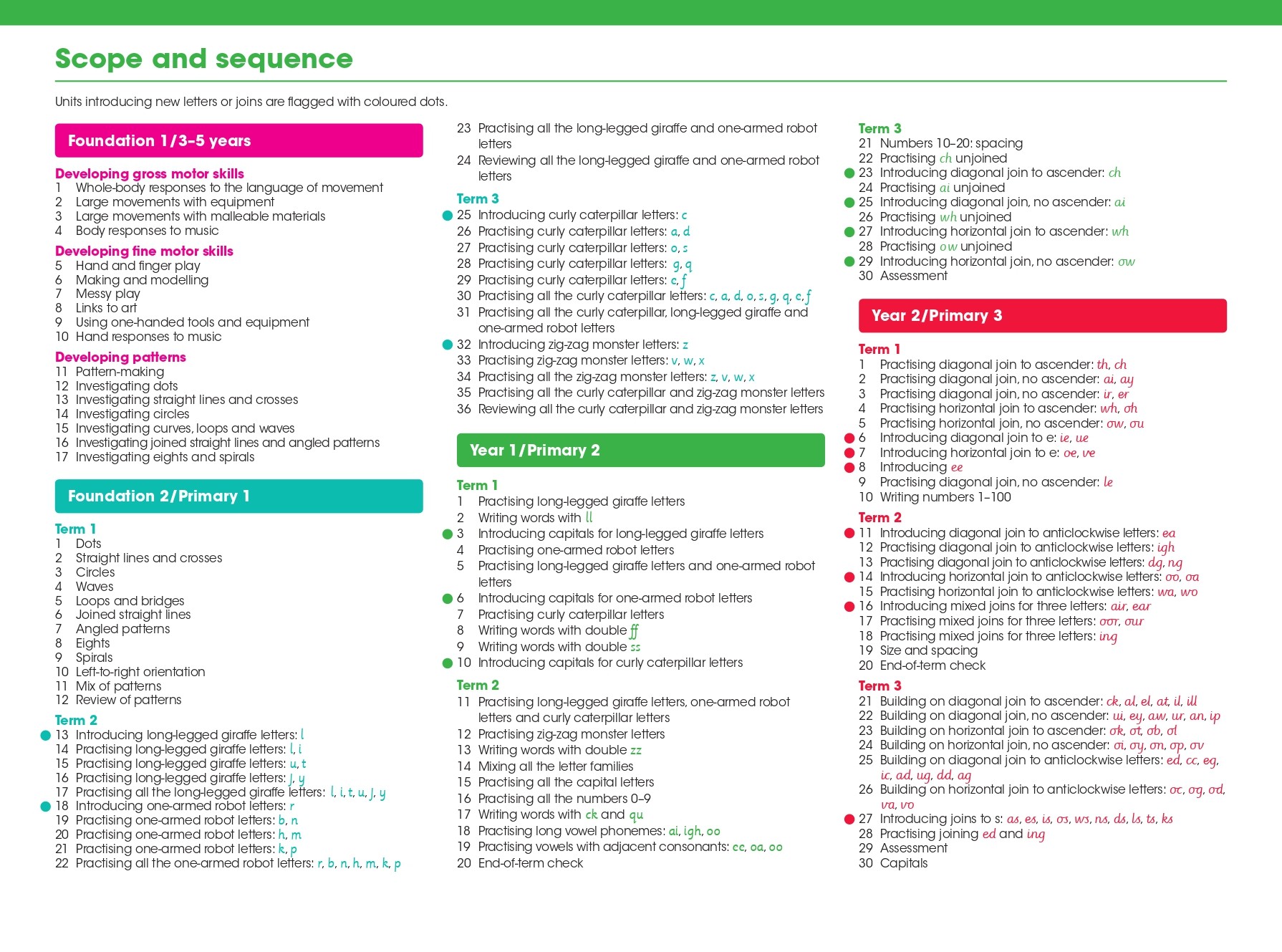
We follow the Penpals Handwriting Scheme from Nursery to Year 6 to ensure consistent progression in letter formation, pencil grip, fluency and handwriting stamina across EYFS and KS2. Penpals lessons are taught discretely and reinforced through daily writing activities.
Handwriting and spelling are taught explicitly and systematically across the school, ensuring pupils develop accuracy, fluency and independence in their transcription skills.
Teachers:
-
Use high-quality model texts to explore structure, language and themes.
-
Integrate oral rehearsal, drama and vocabulary teaching to strengthen pupils’ ideas and sentence construction.
-
Explicitly teach grammar and punctuation in context to enhance writing authenticity.
-
Model writing regularly, demonstrating the writer’s craft and revising process.
-
Provide scaffolded support such as word banks, sentence stems, writing frames and guided groups.
-
Ensure pupils edit and improve their writing through structured editing lessons.
Assessment
-
As a Voice 21 Oracy School, teachers use structured talk and oral rehearsal to assess pupils’ understanding before writing.
-
We hold regular in-school writing moderation sessions across year groups and phases to validate teacher judgements.
-
For spelling, we use GL Spelling assessments, enabling staff to track progression and identify gaps in phonological and orthographic knowledge.
-
Assessment is also used to identify pupils working beyond age-related expectations, ensuring adaptive teaching caters for both vulnerable learners and higher-attaining pupils within each year group.
-
Formative assessment is embedded within lessons; teachers provide precise feedback and responsive teaching.
-
Summative assessments use the Local Authority Writing Framework and National Curriculum expectations.
-
Moderation takes place across year groups, phases and with external partners to ensure accuracy.
IMPACT
The impact of our Writing curriculum is measured through outcomes, attitudes and progress.
Pupils at Cullercoats Primary School:
-
Make strong progress from their starting points and achieve well in writing at each key stage.
-
Demonstrate secure knowledge of grammar, spelling and composition appropriate to age‑related expectations.
-
Produce writing that is purposeful, coherent and well‑structured across a variety of genres.
-
Develop as enthusiastic, reflective and resilient writers who can articulate their ideas clearly.
-
Leave Year 6 well-prepared for the writing demands of secondary school.
Evidence of Impact
-
High-quality writing showcased in books and published displays across the school.
-
Pupil voice evidencing enjoyment, confidence, and pride in writing achievements.
-
Consistent outcomes aligned with Local Authority moderation findings, ensuring accuracy and rigor.
-
Improved writing stamina, independence, and accuracy demonstrated across the curriculum.
-
Seesaw Celebrations capturing the practical elements of English teaching and learning, including:
- Early writing skills in Nursery and Reception, such as mark-making, storytelling, and emergent writing, shared with families to celebrate progress.
- Oracy development in Year 1, where pupils verbally retell their own versions of Brown Bear, Brown Bear, showcasing creativity and spoken language skills.
- Ongoing documentation of pupils’ writing journeys, enabling authentic evidence of progress and engagement.
This Intent, Implementation and Impact statement underpins all curriculum documentation for English Writing at Cullercoats Primary School and ensures that our approach remains ambitious, inclusive and aligned with national expectations.
English (Handwriting)
INTENT
At Cullercoats Primary School, our intent is to ensure that every child develops excellent handwriting skills that will serve as a strong foundation for their future academic success. We believe that handwriting is a vital skill that not only supports effective communication but also enhances cognitive development and fine motor skills. Our aim is for every pupil to develop legible, fluent, and consistent handwriting that reflects their individual style while adhering to the conventions of British English. Every child at Cullercoats Primary School will follow the Penpals handwriting scheme which ensures progression through five developmental stages. From the early development of gross and fine motor skills to confident letter formation, accomplished joins and a fast, fluent, legible and personalised style, Penpals will significantly improve all areas of handwriting at Cullercoats Primary School.
IMPLENTATION
Clear Expectations and Consistent Teaching
-
We have created a handwriting policy that outlines clear expectations for handwriting standards across the school.
-
Our teachers receive regular training and professional development to ensure consistent and effective teaching of handwriting techniques.
-
Using the Penpals Handwriting Scheme, we use a systematic approach, starting with pre-writing exercises, and progressively teaching letter formation, sizing, spacing, and joining techniques.
-
We provide engaging and differentiated resources that cater to the diverse needs of our learners, including additional support for those with special educational needs or disabilities.
Integration with the Curriculum
-
Handwriting is taught daily in standalone sessions. These sessions last a minimum of 10 minutes and follow the Penpals progressive scheme – Nursery to Year 6.
-
Handwriting is also integrated within the wider curriculum to provide meaningful and purposeful opportunities for practice and application.
-
We explicitly teach handwriting across subjects such as English, History, Geography, Science, and Art, emphasising the relevance and importance of legible handwriting in different contexts.
-
Pupils are encouraged to use their handwriting skills when presenting work, creating displays, or engaging in group activities, fostering a sense of pride and ownership.
Modelling and Scaffolded Practice
-
Our teachers model correct letter formation and handwriting techniques during whole-class instruction, providing students with clear visual examples to follow. At CPS, we follow the Penpals handwriting model.
-
Scaffolded practice is implemented through a gradual release of responsibility, allowing students to progress from guided practice to independent writing tasks.
-
Handwriting skills are reinforced through daily short handwriting sessions, which focus on specific areas for improvement or consolidation.
Personalised Feedback and Support
-
We provide regular, constructive feedback on handwriting through ongoing monitoring, teacher-led assessments, and self-assessment opportunities.
-
Students receive personalised targets and strategies for improvement, with guidance on how to evaluate and refine their own handwriting.
-
Additional support is offered to pupils who are struggling with their handwriting, including one-to-one intervention or individualised handwriting programs, if necessary. These would be recommended by the school’s SENCO or OT.
Engagement and Celebration
-
We create a positive and stimulating handwriting environment that promotes engagement and motivation. The Penpals scheme uses interactive resources and videos to engage learners of all ages and abilities.
-
The use of multi-sensory resources, such as tactile materials or digital tools (Penpals), is integrated to engage different learning styles.
-
We celebrate and showcase excellent handwriting through displays, certificates, and school-wide initiatives, fostering a sense of achievement and pride in students' progress.
IMPACT
Our approach to handwriting will result in a significant impact on our pupils' learning and development:
-
Achievement: The majority of our pupils demonstrate clear progress and meet or exceed age-related expectations in handwriting.
-
Consistency: Our pupils consistently exhibit legible, fluent, and consistent handwriting across all subject areas and written tasks.
-
Confidence and Independence: Pupils show increased confidence in their ability to produce high-quality written work independently.
-
Engagement: Handwriting sessions and activities are eagerly anticipated, and students actively participate in improving their handwriting skills.
-
Transferable Skills: Improved fine motor skills developed through handwriting positively impact other areas of the curriculum, such as art or science experiments.
-
Celebration of Achievement: The celebration of excellent handwriting promotes a positive ethos at our school, motivating pupils to continually improve their skills.
Through our outstanding implementation of handwriting strategies, we ensure that our pupils develop the essential skills and confidence needed for successful communication and academic success, while fostering a love for the written word.

English (Oracy)
What is Oracy and Why Is It Important to Cullercoats Primary School Children?
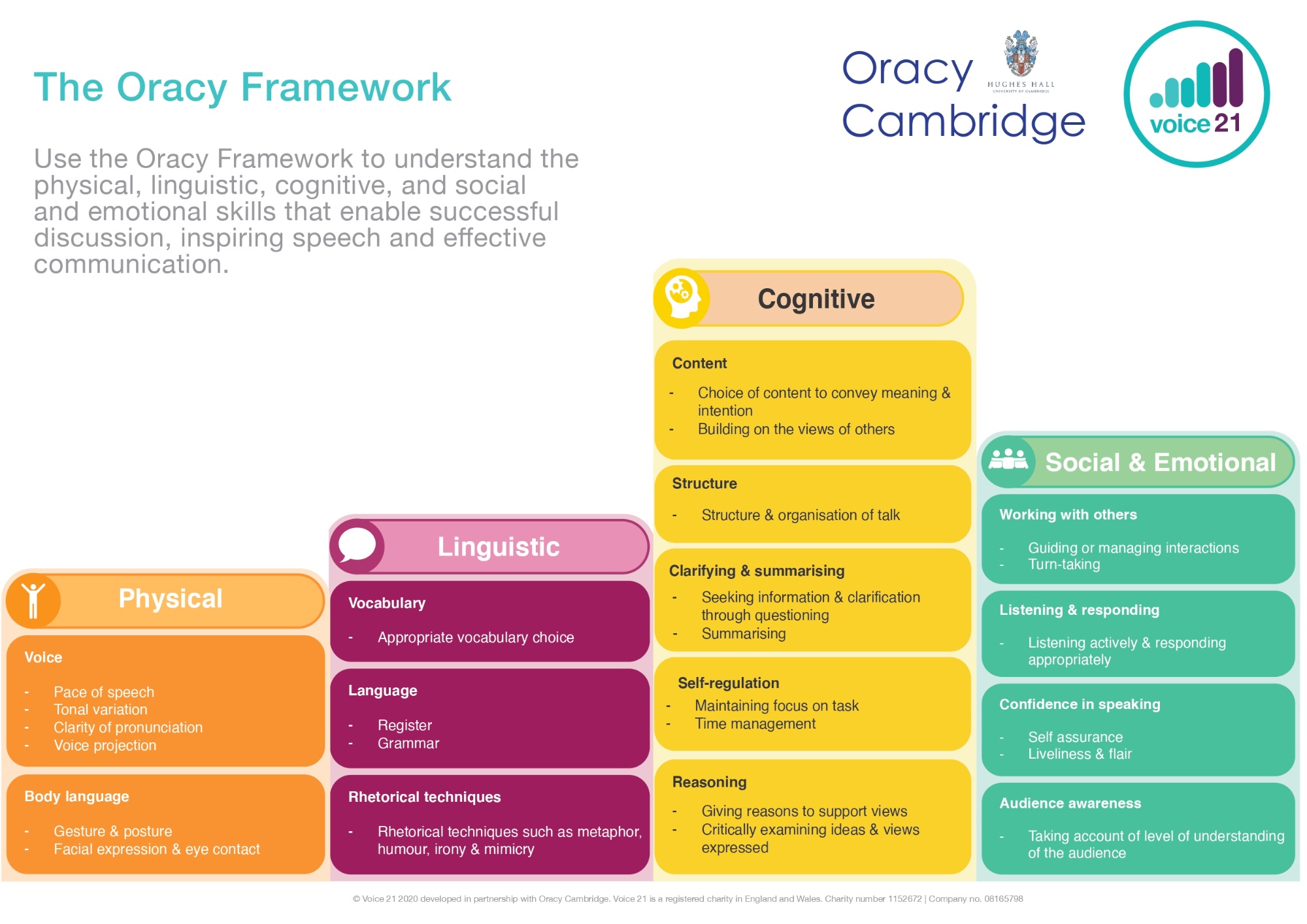
Oracy refers to the ability to express oneself fluently and communicate effectively through spoken language. It encompasses various skills, including speaking, listening, and understanding, which are crucial for children's cognitive, social, and emotional development.
At Cullercoats Primary School, we believe oracy is essential because it:
-
Enhances learning: Speaking and listening help children process information and develop their understanding of different subjects.
-
Builds confidence: Encouraging children to speak in front of others boosts self-esteem and prepares them for public speaking and group discussions.
-
Develops social skills: Through effective communication, children learn to interact with peers, resolve conflicts, and build relationships.
-
Supports literacy: Strong oral skills are closely linked to reading and writing abilities, helping children become more proficient in all areas of language.
-
Helps children succeed throughout their lives: Oracy equips children with essential communication skills that are critical for success in secondary education, higher education, and the workplace. Effective speaking and listening enable them to collaborate, present ideas, and adapt to different social and professional settings as they grow.
As part of the Voice 21 Oracy project, Cullercoats Primary School is committed to embedding these crucial skills across our curriculum, ensuring every child becomes a confident and articulate communicator.
What Is Exploratory Talk and How Can It Be Planned for and Developed in Cullercoats Primary School?
Exploratory talk is a form of discussion where children engage in open-ended conversations to explore ideas, reason together, and build on each other's thoughts. It’s characterised by questioning, clarifying, and considering multiple perspectives, fostering deeper understanding and critical thinking.
To plan for and develop exploratory talk at Cullercoats Primary School, we can:
-
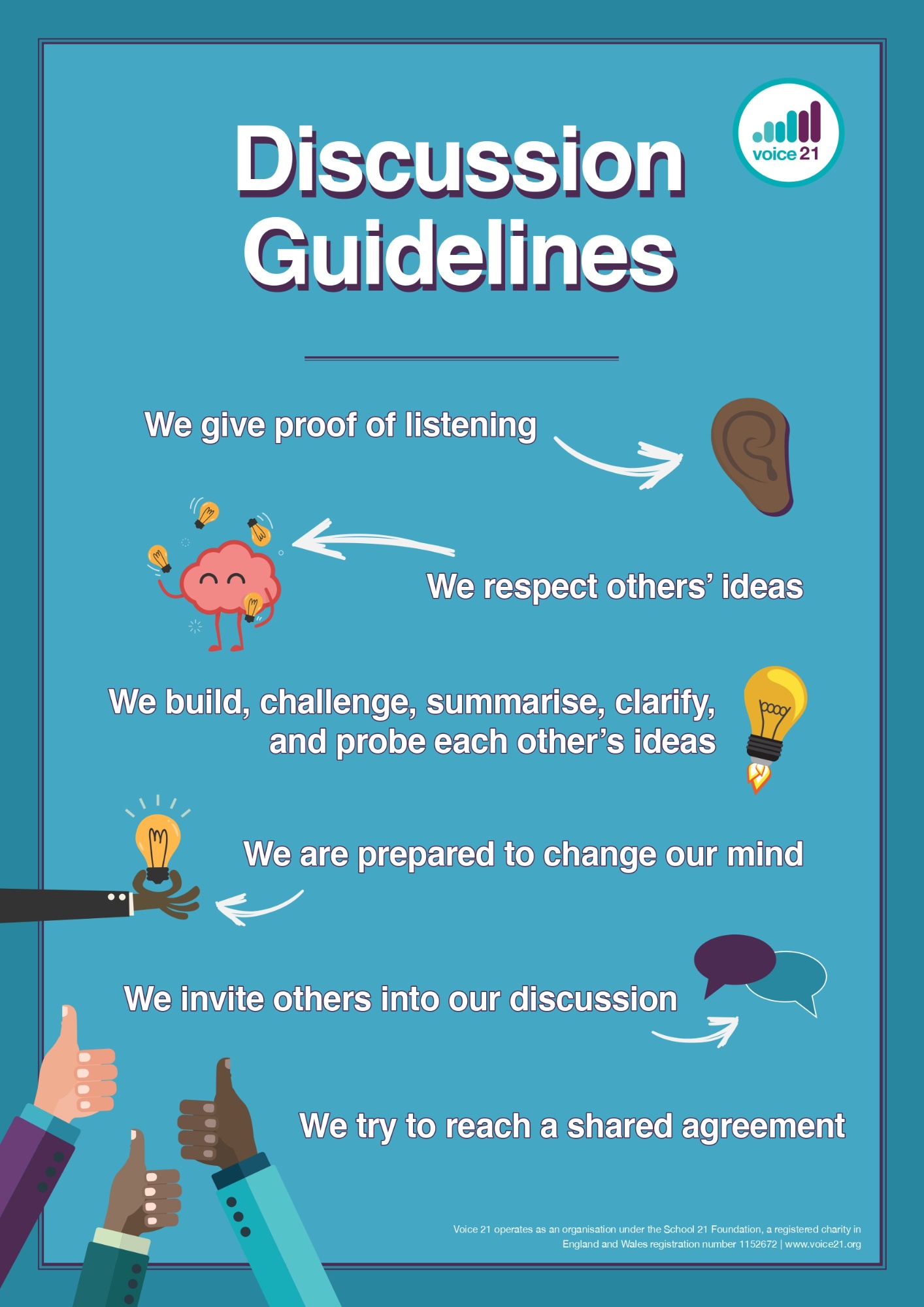
Create a supportive environment: Establish clear rules for respectful listening and speaking, ensuring that all voices are heard and valued.
-
Model good practice: Demonstrate how to engage in exploratory talk by thinking aloud, asking questions, and showing how to build on others’ ideas.
-
Use structured activities: Implement tasks like group discussions, debates, and problem-solving challenges that require students to articulate their thoughts.
-
Provide sentence stems: Offer phrases like "I think that... because," "What do you mean by...?," or "Can you explain further?" to guide discussions and encourage deeper engagement.
-
Reflect on discussions: After group activities, have children reflect on how they communicated and what they could improve, reinforcing the value of thoughtful dialogue.
Can Oracy Be Taught in a Way That Values Every Voice at Cullercoats Primary School?
Yes, oracy can be taught in a way that values every voice by:
-
Promoting inclusivity: Ensure that every child, regardless of their background or ability, has opportunities to speak and be heard. This can be achieved by setting up small group activities, turn-taking systems, and safe spaces where children feel comfortable sharing their thoughts.
-
Differentiating support: Tailor activities to suit the varying needs of students, such as providing additional support for children who may be shy, have speech difficulties, or are learning English as an additional language.
-
Encouraging a culture of respect: Foster an environment where every contribution is respected, and students are taught to listen actively and respond thoughtfully to their peers.
-
Celebrating diversity: Use topics and materials that reflect the diverse backgrounds and experiences of the school community, making discussions more relatable and meaningful to every child.
By integrating these practices and with the support of the Voice 21 Oracy project, Cullercoats Primary School ensures that oracy instruction is inclusive, empowering all children to develop their voices and participate confidently in our school community.
English (Phonics)
Cullercoats Primary School is committed to ensuring that every child becomes a confident and fluent reader. We use Floppy’s Phonics Oxford, a Department for Education (DfE) validated systematic synthetic phonics (SSP) programme, to deliver high-quality phonics teaching in line with national expectations.
INTENT
Our intent is to provide a rigorous, structured approach to early reading and writing that enables all pupils to develop secure phonics knowledge. Through Floppy’s Phonics Oxford, we aim to:
• Ensure fidelity to a validated SSP programme.
• Equip pupils with the skills to decode and encode words confidently.
• Foster a love of reading through engaging resources and texts.
• Close gaps in attainment and support all learners, including those who require additional intervention.
IMPLENTATION
At Cullercoats Primary School, phonics is taught daily in Reception and Key Stage 1 following the Floppy’s Phonics Oxford progression. Key features of implementation include:
• Daily, discrete phonics lessons delivered by trained staff.
• Use of high-quality resources including teaching handbooks, interactive eBooks, flashcards, and decodable readers.
• Regular assessment to monitor progress and inform targeted support.
• Home-school links through Oxford Owl online resources to reinforce learning.
IMPACT
The impact of our approach is evident in improved outcomes in the Year 1 Phonics Screening Check and increased pupil confidence in reading and writing. Pupils demonstrate secure knowledge of grapheme-phoneme correspondences and apply these skills across the curriculum. Our phonics provision supports Ofsted’s focus on early reading and ensures pupils ‘keep up’ rather than ‘catch up’.
Alignment with Ofsted and DfE Expectations
Floppy’s Phonics Oxford is fully aligned with the National Curriculum and the DfE Reading Framework. It meets statutory requirements for systematic synthetic phonics and provides decodable texts matched to pupils’ phonics knowledge. Assessment tools enable staff to track progress and implement timely interventions, supporting Ofsted’s emphasis on early reading.
Alignment with Reading Framework and EEF Research
The programme reflects the principles outlined in the Reading Framework, including daily phonics teaching, fidelity to a clear progression, and integration of reading and writing. Research from the Education Endowment Foundation (EEF) identifies phonics as a high-impact, cost-effective strategy for improving early literacy, with an average of +5 months additional progress when delivered effectively. Floppy’s Phonics Oxford incorporates these evidence-based practices.
English (Spelling)
INTENT
At Cullercoats Primary School, our Spelling curriculum is designed to ensure that all pupils develop secure, accurate and fluent spelling skills, enabling them to communicate effectively and confidently in writing. In line with the English National Curriculum and the 2025 Ofsted Framework, our intent is to provide a systematic, knowledge-rich and progressive approach to spelling that builds pupils’ phonological awareness, orthographic knowledge and morphological understanding.
We aim for pupils to:
-
Develop a secure understanding of spelling patterns, rules and exceptions.
-
Apply spelling knowledge accurately in independent writing across all subjects.
-
Build confidence and independence in proofreading and self-correction.
-
Understand the relationship between phonics, morphology and etymology in spelling.
-
Learn statutory word lists for each year group and apply them in context.
-
Foster curiosity about words, their origins and meanings to enrich vocabulary.
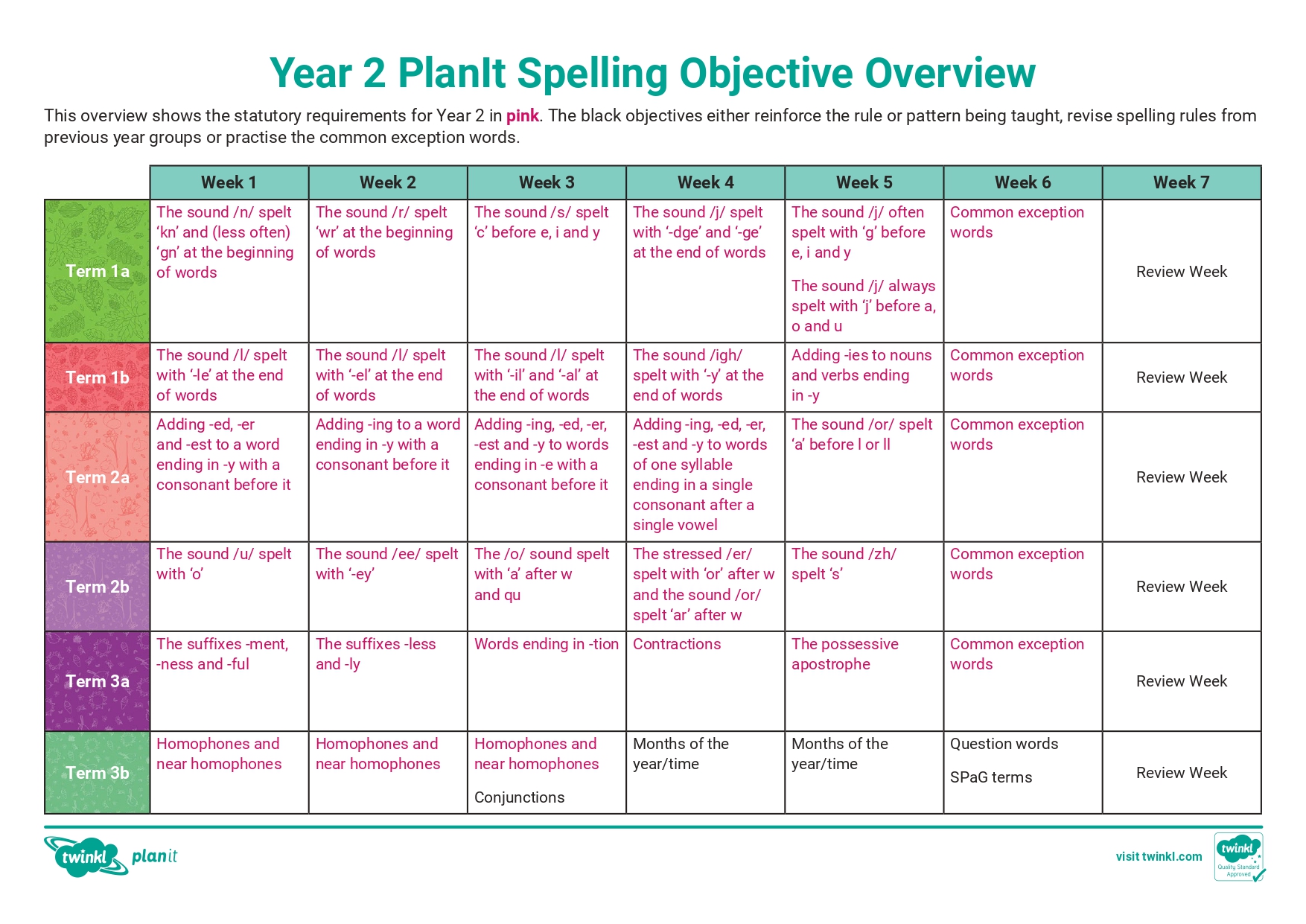
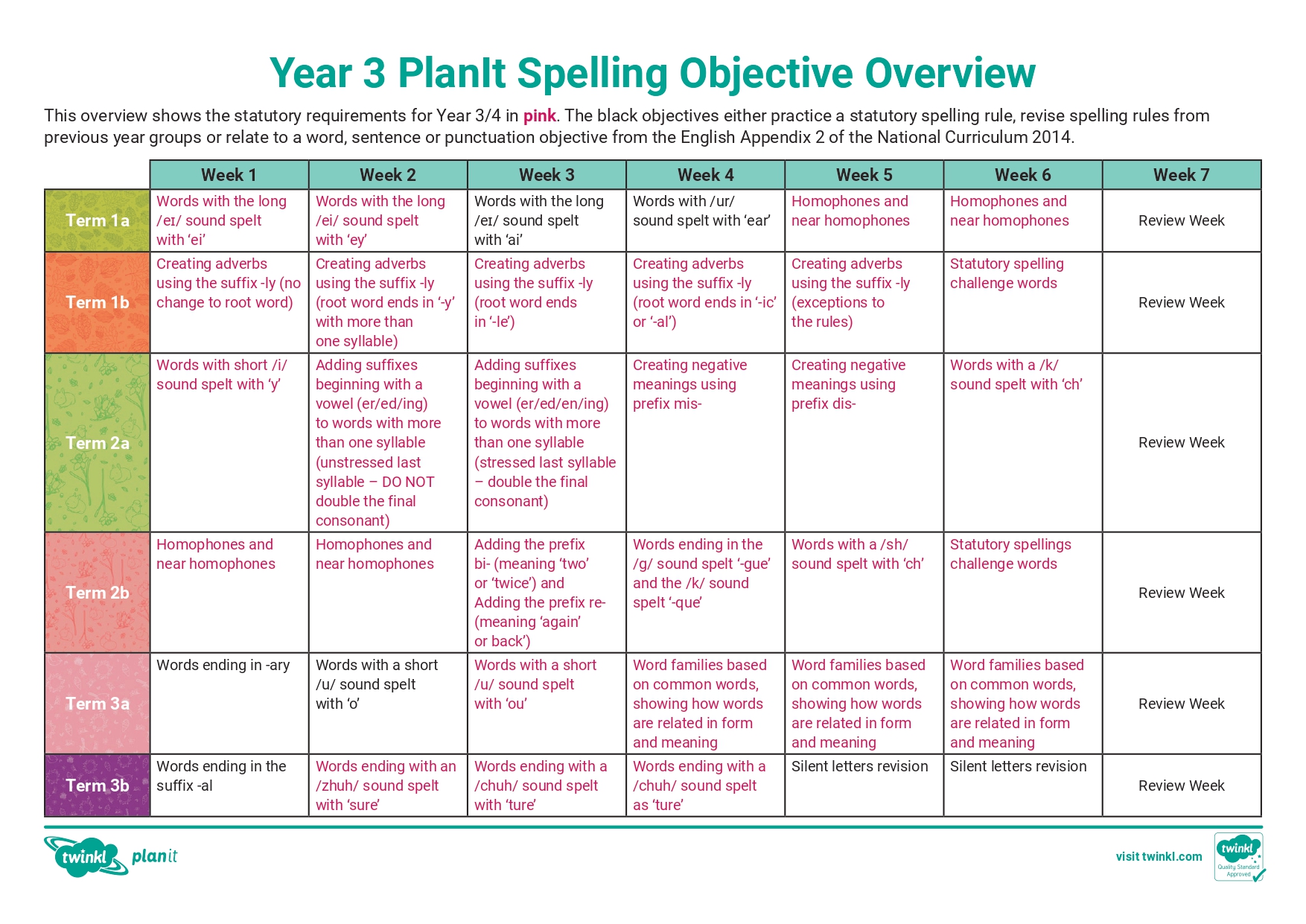
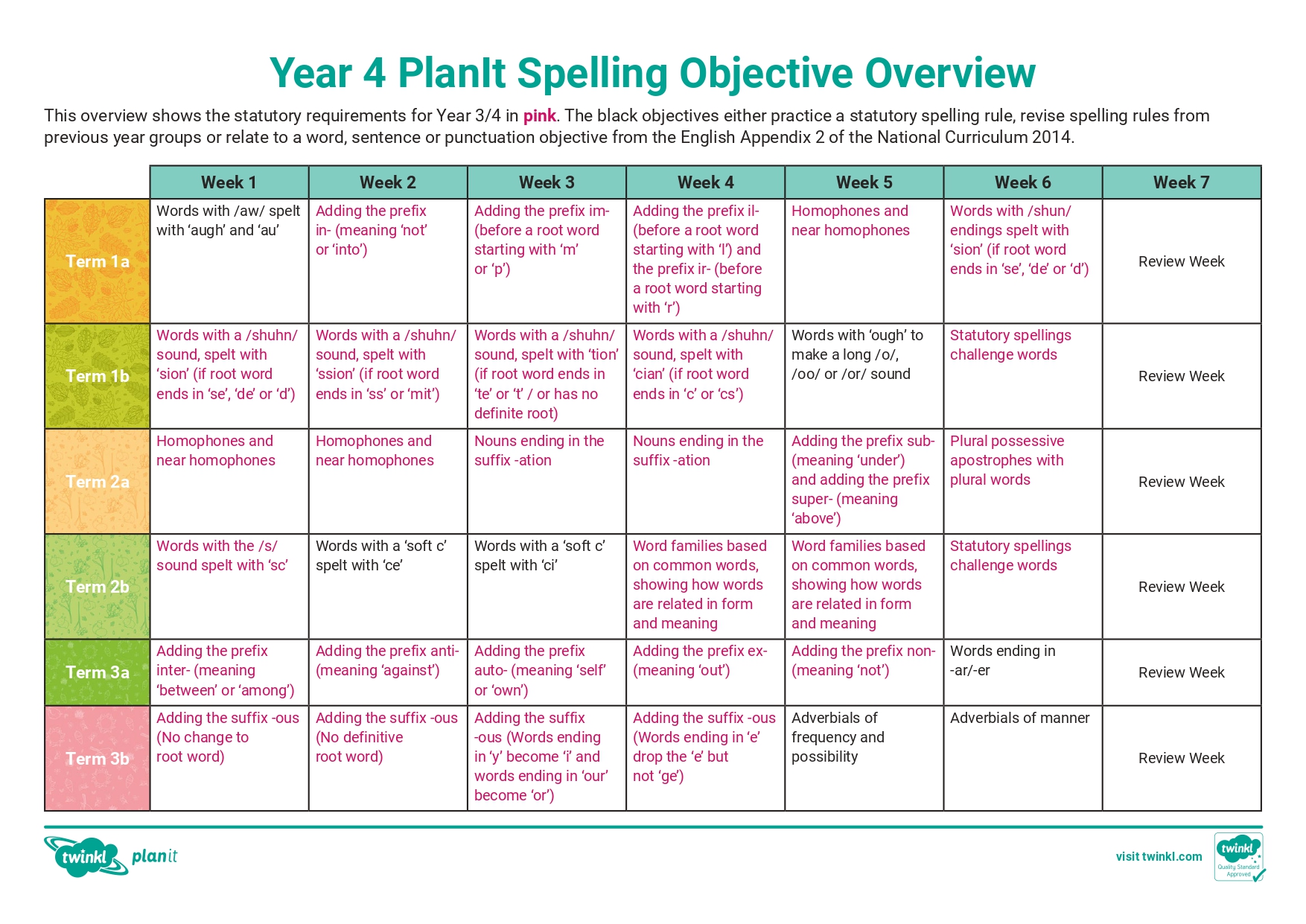
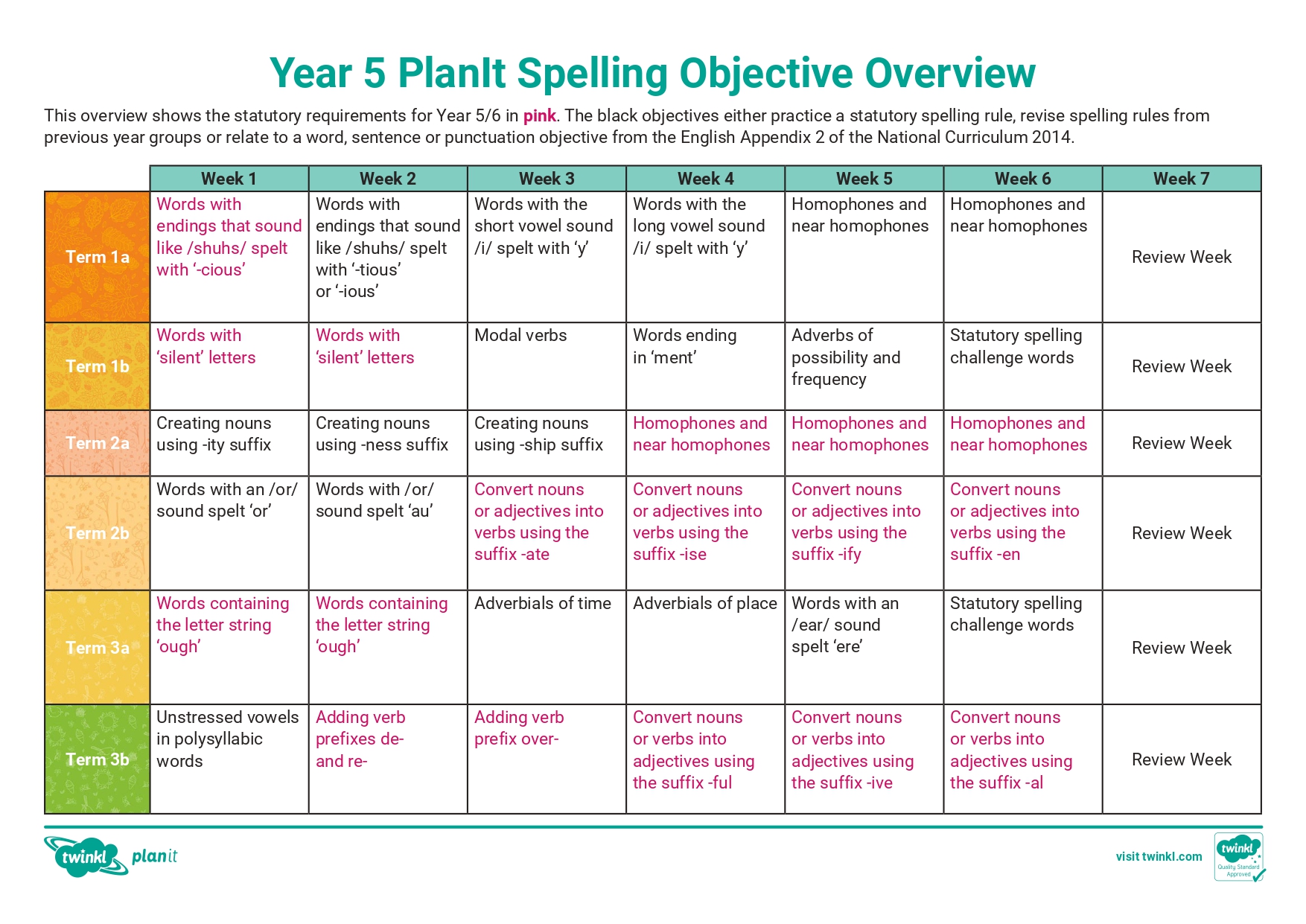
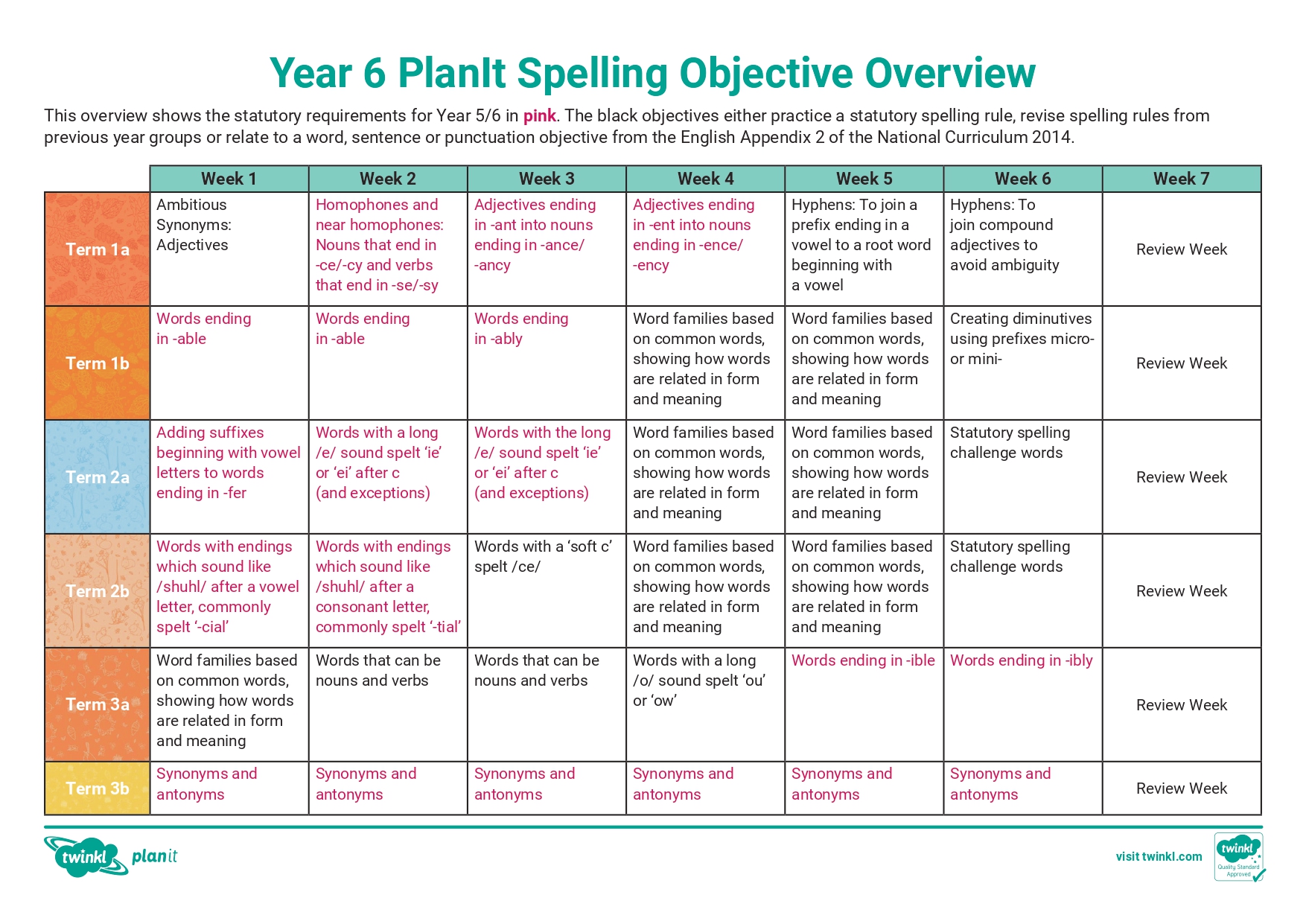
Our curriculum follows Twinkl Spelling Overviews, which provide explicit teaching of spelling patterns alongside statutory word lists. This ensures consistency, progression and full coverage of National Curriculum expectations.
IMPLEMENTATION
Our approach to spelling is systematic, explicit and embedded within regular weekly teaching. Lessons are structured to introduce, explore and apply spelling patterns through a range of engaging activities.
Curriculum Design
-
Long-term plans map out progression in spelling patterns, statutory word lists and morphological knowledge from Year 2 to Year 6.
-
Medium-term planning uses Twinkl Spelling Overviews to sequence weekly objectives and ensure cumulative learning.
-
Spelling is taught discretely in dedicated sessions and reinforced through writing across the curriculum.
Teaching & Learning Approach
-
Year 1: Spelling is taught through Floppy’s Phonics to secure phonological foundations and early spelling behaviours.
-
Year 2 and KS2: Spelling is taught using Twinkl Spelling Overviews, with explicit focus on patterns, morphology and etymology.
-
Teachers:
-
Deliver explicit instruction of spelling patterns, rules and exceptions.
-
Use multi-sensory strategies (oral rehearsal, visual prompts, word sorting) to strengthen retention.
-
Teach morphology (prefixes, suffixes, root words) and etymology to deepen understanding.
-
Provide scaffolded support such as word banks, spelling journals and targeted interventions.
-
Encourage proofreading and editing to promote independence and accuracy.
Assessment
-
GL Assessment is used to assess spelling knowledge and track progress across the school.
-
KS1: Assessment focuses on phonics application and common exception words.
-
KS2: Teacher Assessment Focuses (TAFs) and year-group specific objectives are used alongside statutory lists.
-
Common exception words and statutory spelling lists are assessed regularly throughout the year.
-
Writing moderation sessions validate application of spelling in context.
-
Formative assessment within lessons through observation, discussion and written outcomes.
-
Weekly spelling checks to monitor retention and application.
-
Children who present with spelling difficulties receive tailored intervention to address gaps and accelerate progress.
IMPACT
The impact of our Spelling curriculum is evident in pupils’ confidence, accuracy and independence in writing.
Pupils at Cullercoats Primary School:
-
Make strong progress from their starting points and achieve well in spelling at each key stage.
-
Demonstrate secure knowledge of spelling patterns, statutory word lists and morphological understanding.
-
Apply accurate spelling consistently across all written work.
-
Develop as confident, reflective learners who take pride in their written communication.
-
Leave Year 6 well-prepared for the spelling demands of secondary school.
Evidence of Impact
-
High-quality written work showing accurate spelling and application of taught patterns.
-
Consistent outcomes aligned with Local Authority moderation findings.
-
Improved independence in proofreading and editing across the curriculum.
Yearly Spelling Objectives
Geography
At Cullercoats Primary School, we believe geography is essential in helping children understand the world and develop a strong sense of place.
Our local area of Cullercoats is central to our curriculum, with the coastline, beach, harbour and settlement providing rich opportunities for fieldwork and enquiry.
Through studying Cullercoats, children learn how physical and human features interact, how the coast has shaped the community, and how environments can be used and protected. Hands-on experiences help children develop key geographical skills such as map reading, observation and data collection, while making learning meaningful, relevant and memorable.
Geography at Cullercoats fosters curiosity, respect for the environment and an understanding of the wider world, supporting children to become informed and responsible global citizens.
Subject Leads - Mrs Jo Elliott (KS1) and Mr Simon Meardon (KS2)
INTENT
At Cullercoats Primary School, we believe Geography should begin on our doorstep. Our intent is to deliver a high-quality Geography education that inspires curiosity, nurtures a sense of wonder, and develops pupils’ understanding of the world through meaningful connections to Cullercoats, its coastline, and its rich maritime heritage.
By exploring our local environment – including Cullercoats Bay, the Watch House, the Smugglers’ Caves, and the Dove Marine Laboratory – pupils develop a strong sense of place and identity, before extending their understanding to regional, national, and global contexts.
We aim to equip pupils with the knowledge, skills, and values needed to become informed, responsible global citizens who understand the relationship between people and the environment and who are committed to sustainability and stewardship of the natural world.
Our Geography curriculum is guided by the National Curriculum, ensuring clear progression of knowledge and skills across key stages. It is carefully designed to reflect the needs, interests, and lived experiences of our pupils, making learning purposeful, engaging, and relevant.
IMPLEMENTATION
Our Geography curriculum is designed to provide pupils with a coherent, progressive learning journey, rooted in local fieldwork and enriched through wider geographical enquiry. Learning is brought to life through high-quality teaching, practical experiences, and strong links with our local environment and community.
1. Curriculum Design and Sequencing
Our curriculum is ambitious and carefully structured, ensuring breadth, depth, and progression. Key themes are revisited and built upon as pupils move through school, with learning contextualised through local, national, and global examples.
Key areas include:
· Locational knowledge: Pupils develop an understanding of where they live by studying Cullercoats, North Tyneside, and the North East coast, before expanding to the UK, Europe, and the wider world. Local landmarks such as the Watch House and Cullercoats Bay are used to introduce mapping, direction, and scale.
· Human and physical geography: Pupils explore coastal processes, settlement, and land use through first-hand study of the Cullercoats coastline, including erosion, tides, and the impact of human activity. Historical features such as the Smugglers’ Caves provide meaningful links between physical geography, history, and human adaptation to the environment.
· Environmental sustainability: Our coastal location allows pupils to investigate marine ecosystems, pollution, and conservation. Links with the Dove Marine Laboratory support learning about habitats, biodiversity, and the importance of protecting our seas for future generations.
· Geographical skills and fieldwork: Fieldwork is central to our curriculum. Pupils regularly use maps, atlases, aerial photographs, and digital mapping tools, alongside hands-on data collection through beach surveys, traffic counts, and environmental observations within the local area.
Learning is carefully sequenced so that new knowledge builds on prior learning, allowing pupils to make meaningful connections between topics and develop a secure understanding of key geographical concepts.
2. High-Quality Teaching and Learning
High-quality teaching ensures all pupils can access and enjoy Geography. Lessons are carefully planned and delivered using a range of strategies, including direct teaching, enquiry-based learning, discussion, and practical investigation.
Teachers use the local environment as a powerful teaching tool, providing real-life contexts that deepen understanding and increase engagement. Resources include maps of Cullercoats and the surrounding coastline, fieldwork equipment, photographs, digital tools, and artefacts linked to maritime life.
Where possible, pupils benefit from expert input, including visits or workshops linked to marine science and coastal geography, drawing on the expertise available through local organisations such as the Dove Marine Laboratory.
3. Enrichment Opportunities
We enhance Geography learning through a range of enrichment opportunities that strengthen pupils’ understanding of place and community:
· Fieldwork and local visits: Regular visits to Cullercoats Bay, the Watch House, the Smugglers’ Caves, and surrounding coastal areas allow pupils to apply classroom learning in real-world contexts.
· Community links: Pupils engage with the local community to explore how geography influences daily life in Cullercoats, including tourism, fishing, conservation, and coastal safety.
· Environmental projects: Participation in beach cleans and sustainability projects helps pupils understand their role in caring for the local environment.
· Global links: Learning is extended beyond the local area through comparisons with contrasting coastal and non-coastal locations around the world, developing pupils’ global awareness and cultural understanding.
IMPACT
The impact of our Geography curriculum is evident in pupils who are confident, knowledgeable, and enthusiastic geographers with a strong connection to their local area.
As a result of our provision:
· Pupils demonstrate a secure understanding of key geographical concepts and can apply their learning to real-life contexts, particularly in relation to coastal environments.
· Pupils show pride in Cullercoats and an appreciation of its physical features, history, and environmental significance.
· Pupils develop strong geographical skills, including map reading, fieldwork, data collection, and interpretation.
· Pupils understand the importance of sustainability and show a commitment to protecting the natural environment, especially marine and coastal habitats.
· Outcomes in Geography are consistently strong, with the majority of pupils achieving or exceeding age-related expectations.
Through our Geography provision, we nurture a lifelong curiosity about the world, enabling pupils at Cullercoats Primary School to become informed, responsible, and environmentally aware citizens who value both their local community and the wider world.
SKILLS MAPPING DOCUMENTS
History
At Cullercoats Primary School, we believe history is essential in helping children understand the world by exploring the past, recognising change over time and appreciating the stories that have shaped society.
Through history, children develop key skills such as curiosity, critical thinking, empathy and the ability to question evidence and form informed judgements.
Cullercoats is at the heart of our history curriculum. The village’s fishing heritage, coastal development, buildings and local landmarks provide rich, first-hand opportunities for children to explore the lives of people who lived and worked here, helping them develop a strong sense of place and connection to the past.
History at Cullercoats is brought to life through hands-on experiences, primary sources and visits, while making meaningful links across the curriculum. Our aim is to inspire enthusiasm for history and help children understand its lasting importance in their own lives, their community and the wider world.
Subject Leads - Mrs Jo Elliott (KS1) and Mr Simon Meardon (KS2)
INTENT
At Cullercoats Primary School, our intent for the teaching of History is to cultivate a deep and lasting love for the subject amongst our pupils. We aim to provide a curriculum that is rich in diverse historical content, allowing pupils to develop a clear understanding of Britain’s past, as well as key events and civilizations from around the world. Our intent is to equip our pupils with the skills to critically analyse historical sources, think chronologically, and draw connections between past and present. Through our History curriculum, we strive to foster cultural empathy, citizenship, and an appreciation for the role history plays in shaping the world we live in.
We also recognise the unique heritage of Cullercoats and aim to embed local history into our teaching. Pupils will explore fascinating stories from our community, such as the life and work of Robert Scraper Smith, the historic Cullercoats Watch House, and the intriguing Smugglers’ Caves along our coastline. These local narratives help pupils develop a strong sense of identity and pride in their community.
IMPLEMENTATION
To achieve our intent for History, we have carefully designed a curriculum that is engaging, inclusive, and aligned with the most recent Ofsted framework. Our implementation strategy includes:
1. Well-Structured Curriculum: Our History curriculum is thoughtfully sequenced, ensuring clear progression in knowledge and skills. Pupils journey through key historical concepts and periods, while also exploring local heritage such as the role of the Watch House in coastal safety and the stories of smuggling in Cullercoats.
2. Historical Enquiry and Source Analysis: Pupils develop enquiry skills by analysing primary and secondary sources, including artefacts, photographs, and maps. For example, they investigate historical documents linked to Robert Scraper Smith and study images of the Watch House to understand its significance.
3. Cross-Curricular Links: We integrate history with subjects like English, Art, and Geography. Pupils might write narratives inspired by the Smugglers’ Caves or create artwork depicting life in Cullercoats during the 19th century.
4. Cultural Diversity and Inclusion: Our curriculum celebrates diverse voices and perspectives, ensuring pupils appreciate the richness of different cultures throughout history.
5. Local and Global History: Local history is central to our approach. Pupils learn how Cullercoats evolved from a fishing village to a thriving community, exploring figures like Robert Scraper Smith landmarks such as the Watch House. Alongside this, we study global civilizations and significant world events.
6. Effective Assessment: We use formative and summative assessments to monitor progress, alongside creative projects such as research on local landmarks.
7. Continuing Professional Development (CPD): Teachers receive ongoing training to deliver high-quality lessons and incorporate local history effectively.
IMPACT
Our approach ensures pupils develop historical knowledge, critical thinking, and cultural awareness. They show enthusiasm for history, engage in debates, and produce high-quality work. Local history projects such as presentations on the Smugglers’ Caves or reports on Robert Scraper Smith demonstrate their ability to connect the past with their own community.
By embedding Cullercoats’ unique heritage into our curriculum, we foster pride, curiosity, and a lifelong love of history. Pupils leave our school equipped with the knowledge and skills to understand and appreciate both local and global history.
SKILLS MAPPING DOCUMENTS
Maths
As Maths Leads, we are passionate about helping every child develop confidence, curiosity and enjoyment in Maths. Maths is essential for life—from managing money and telling time to problem-solving, planning and future careers in science, technology and engineering.
Strong early Maths skills build foundations for learning across the curriculum and beyond school. At Cullercoats, we are committed to making Maths engaging, inclusive and meaningful so that the pupils grow as capable, curious learners. We believe our Maths curriculum, with its practical, creative and cross-curricular opportunities show how Maths connects to every subject and to the wider world.
Subject Leads - Mrs Clair Watt (EYFS and KS1) and Miss Ashleigh Forster (KS2)
INTENT
“At Cullercoats, we believe that we strive to instill in our children a love of learning for Maths, both in the classroom and in the world around them.” By working together, all children will develop and reach their full potential and become fluent, confident mathematicians. We offer a broad range of cross curricular activities to enhance and consolidate Maths skills and knowledge.
Our aims are to ensure that all pupils:
-
become fluent and confident in Maths.
-
develop a sound mathematical vocabulary in order to be able to confidently reason and problem solve.
-
use and apply their mathematical knowledge in a range of contexts.
IMPLEMENTATION
Our journey towards developing a Maths Mastery curriculum began in September 2020, Both Maths Leads have worked alongside Maths Mastery Specialists and Leads from regional schools to observe teaching and work in collaboration as part of the National Centre of Excellence in the Teaching of Mathematics (NCETM) Research Group which is linked to the Maths Hub National Programme. As part of this development Cullercoats invested in a wide range of manipulatives for Nursery - Year 6 to support the teaching of Maths with an initial focus on Representation and Language, including the use of stem sentences.
At Cullercoats, we follow the National Curriculum and use the White Rose Maths Schemes of Work as a structure for teachers to support their planning and assessment. This also incorporates the concrete, pictorial and abstract (CPA) educational approach. The CPA is an educational approach that uses a three-step process to teach abstract concepts, especially in mathematics by first using hands on objects, then visual representations like diagrams, and finally abstract symbols like numbers and operators. In addition the White Rose Maths scheme also supports small steps of learning which ensures an inclusive and adaptive approach for all learners.
Since our Maths Mastery journey began, staff throughout the school, from EYFS, Key Stage One and Key Stage Two have attended Maths Mastery training to develop staff skills and adapt their teaching styles to incorporate the Maths Mastery approach within their daily lessons.
Maths in our classrooms
Our teaching of Maths across the school is underpinned by Rosenshine’s Principles of Instruction, ensuring that learning is broken into small steps, supported by daily review, explicit modelling, guided practice, regular checking for understanding, and opportunities for independent practice. These principles strengthen pupils’ retention, fluency and confidence in Maths
In Early Years, the White Rose Maths small steps of learning are used to scaffold the Early Years Curriculum and ensure our children are given daily opportunities to develop their understanding of number, measurement, pattern, shape and space through a combination of short, formal teaching sessions as well as a range of planned structured play situations. There is plenty of scope for exploration.
In Key Stages 1 and 2, daily Maths lessons are delivered with an adaptive practice in mind to meet the needs of all children. The White Rose Maths – Flashback 4’s are used to consolidate prior learning and to inform planning and teaching. Lessons are designed on the principle of ‘concrete, pictorial to abstract’ and where applicable, a wide range of manipulatives are used in order to support children. This enables them to understand key concepts, and become fluent in methods of calculation. Misconceptions are identified and addressed as and when they arise.
Quality First Teaching alongside high quality age appropriate mathematical language is used throughout the entire school. Children use their Oracy skills along with talk partners and stem sentences throughout each lesson to underpin their mathematical understanding. All children will be actively involved in each Maths lesson where adaptive practice is used alongside differentiated questioning, challenge tasks and individual support when required. Cross curricular opportunities are provided to further develop and support the teaching and learning of Maths.
Next Steps…
The main focus in school will be on staff becoming familiar with and subsequently delivering the Mastering Number approach to develop the fluency and automaticity of times table facts up to 12x12.
IMPACT
Our school are currently using the Sonar system to track, measure progress and attainment of all pupils against age related expectations. Data is analysed to identify any children who have not yet met age related expectations in order for teachers to plan and adapt their practice accordingly. In Year 1 to Year 6, White Rose end of unit and termly assessments, along with GL yearly assessments (Y2-Y6) and teacher assessment are used to inform staff of each pupil’s progress and achievement. These inform the whole school tracking data. In our Early Years, pupils are assessed throughout their time with a summative assessment made against the Early Learning Goals at the end of Reception.
Appropriate challenge is set as and when necessary, ensuring children will all reach their full potential, consolidating their mathematical thinking, reasoning and fluency.
Our Maths Curriculum will ensure that all pupils have developed an enjoyment and a love of learning for Maths, where they are academically prepared for life beyond Cullercoats and throughout their educational journey.
SKILLS MAPPING DOCUMENTS
Modern Foreign Language (French)
As the MFL lead at Cullercoats Primary School, I believe that learning another language gives our children far more than just another subject on the timetable. It gives them lifelong skills that open doors.
Through learning French, children develop confidence in communication, curiosity about the wider world and the ability to connect with people beyond their own community. These are skills which stay with them long after they leave our school. I have seen this first hand with my own children who have travelled extensively after finishing school, exploring new places and embracing new cultures. At Cullercoats we want to inspire that same sense of adventure and ignite in every child the passion for travel and language learning.
Subject Lead - Mrs Debbie Davison
INTENT
Cullercoats Primary School offers a relevant, broad and vibrant foreign languages curriculum intended to inspire and excite our pupils using a wide variety of topics and themes. All pupils are encouraged to achieve their full potential through high expectations and excellent standards in their foreign language journey - the ultimate aim being that pupils will feel willing and able to continue studying languages beyond key stage 2.
The four key language learning skills; listening, speaking, reading and writing will be taught and all necessary grammar will be covered in an age-appropriate way across the primary phase. This will enable pupils to use and apply their learning in a variety of contexts, laying down solid foundations for future language learning.
The intent is that all pupils will develop a genuine interest and positive curiosity about foreign languages, finding them enjoyable and stimulating. Learning a second language will also offer pupils the opportunity to explore relationships between language and identity, develop a deeper understanding of other cultures and the world around them with a better awareness of self, others and cultural differences. The intention is that they will be working towards becoming life-long language learners.
IMPLEMENTATION
All classes will have access to a high-quality foreign languages curriculum using the Language Angels scheme of work and resources. This will progressively develop pupil skills in foreign languages through regularly taught and well-planned weekly lessons in both KS1 and KS2. Children will acquire, use and apply a growing bank of vocabulary, language skills and grammatical knowledge organised around age-appropriate topics and themes.
Each class in KS1 and KS2 has an overview of units to be taught during the academic year to ensure substantial progress and learning is achieved. Each teaching unit is divided into 6 fully planned lessons.
· Each unit and lesson will have clearly defined objectives and aims.
· Each lesson will incorporate interactive whiteboard materials to include ample speaking and listening tasks within a lesson.
· Lessons will incorporate challenge sections.
· Reading and writing activities will be offered in all units. Some extended reading and writing activities are provided so that native speakers can also be catered for.
· Every unit will include a grammar concept which will increase in complexity as pupils move from Early Language units, through Intermediate units and into Progressive units.
· Extending writing activities are provided to ensure that pupils are recalling previously learnt language and, by reusing it, will be able to recall it and use it with greater ease and accuracy. These tasks will help to link units together and show that pupils are retaining and recalling the language taught with increased fluency and ease.
The progression within the 6 lessons in a unit can be described as ‘language Lego’. Blocks of language are taught and, over the course of a 6-week unit, pupils are encouraged to use these blocks to build more complex and sophisticated language structures.
Early Language units are entry level units. Intermediate units subsequently increase the level of challenge by increasing the amount and complexity (including foreign language grammar concepts) of the foreign language presented to pupils. These intermediate units are suitable for Year 4-5 pupils or pupils with embedded basic knowledge of the foreign language. Progressive and Creative Curriculum units are the most challenging units and are suitable for Year 6 pupils or pupils with a good understanding of the basics of the language they are learning. Units are planned to ensure that the language taught is appropriate to the level of the class and introduced when the children are ready. Children will be taught how to listen and read longer pieces of text gradually in the foreign language and they will have ample opportunities to speak, listen to, read and write the language being taught with and without scaffolds, frames and varying levels of support. Previous knowledge is gradually built upon as lessons continue to recycle, revise and consolidate previously learnt language whilst building on all four language skills: listening, speaking, reading and writing.
Knowledge and awareness of required and appropriate grammar concepts will be taught throughout all units at all levels of challenge. Though grammar is integrated and taught discreetly throughout all appropriate units, rules and patterns will be taught by level of challenge:
· We start with nouns and articles and 1st person singular of high frequency verbs in Early Learning units.
· We move on to the use of the possessive, the concept of adjectives, use of the negative form, conjunctions/connectives and introduce the concept of whole regular verb conjugation in Intermediate units.
· We end with opinions and introduce the concept of whole high frequency irregular verb conjugation in Progressive units.
IMPACT
The progressive nature of the planned units guarantees progressive learning and challenge across the school. Units increase in level of challenge, stretch and linguistic and grammatical complexity as pupils move from Early Learning units through Intermediate units and into the most challenging Progressive units. Activities contain progressively more text (both in English and the foreign language being studied) and lessons have more content as the children become more confident and ambitious with the foreign language they are learning.
Early Learning units start at basic noun and article level and teach pupils how to formulate short phrases. By the time pupils reach Progressive units they will be exposed to much longer text and will be encouraged to formulate their own, more personalised responses based on a much wider bank of vocabulary, linguistic structures and grammatical knowledge. They will be able to create longer pieces of spoken and written language and are encouraged to use a variety of conjunctions, adverbs, adjectives, opinions and justifications.
Pupils will continuously build on their previous knowledge as they progress in their foreign language learning journey through the primary phase. Previous language will be recycled, revised, recalled and consolidated whenever possible and appropriate.
SKILLS MAPPING DOCUMENTS
Music
At Cullercoats Primary School, music plays a vital role in shaping confident, creative and well-rounded children.
Through music, we are giving pupils lifelong skills such as teamwork, resilience, self-expression and the ability to listen deeply and respond thoughtfully—skills that support them far beyond the classroom. My own passion for music inspires the way I lead the subject; being part of a local orchestra and band reminds me daily of the joy, discipline and sense of belonging that music brings to my life, and I want our children to experience that too. At Cullercoats, pupils benefit from a wide range of enhanced experiences—performances, instrument lessons, singing events and collaborative projects—which open doors to new opportunities and help them discover their own strengths. Music enriches our school community, builds confidence and nurtures a love of learning that stays with children for life
Subject Lead - Mrs Katherine Raine
INTENT
At Cullercoats Primary School, our intent is to deliver an outstanding music curriculum that inspires and nurtures a love for music in our pupils. We aim to provide them with the necessary skills, knowledge, and understanding to engage with music in a meaningful way.
Our overall intent statement for music education at our primary school is guided by the requirements of the National Curriculum and is as follows:
-
To develop a passion for music
-
To empower pupils to express themselves creatively and emotionally through music.
-
To develop their skills, knowledge and understanding, enabling them to listen to, compose and perform music confidently
-
To develop an appreciation for a wide range of musical styles and genres from different cultures and historical periods.
-
To be given opportunities to sing and play untuned and tuned instruments
-
To be given opportunities to hear live music and appreciate the skills of musicians
-
To be given opportunities to engage with the local community and showcase their musical talents through performances
Music curriculum:
At Cullercoats Primary School we use the Charanga music scheme throughout KS1 and KS2, which ensures a structured and holistic music curriculum and follows the National Curriculum for Music. Charanga enables children to understand musical concepts through a repetition-based approach to learning. Children learn about the same musical concept through different musical activities, which enables a more secure mastery of musical skills. The scheme ensures that children develop new musical skills and concepts, and re-visit established musical skills and concepts. Because it uses a spiral curriculum, it follows our whole school ethos of Rosenshine’s Principles, reviewing and gradually introducing new concepts, and scaffolding more difficult tasks.
Within Charanga, children are given opportunities to listen to and appraise music from different styles, genres, cultures, and historical periods. Pupils have opportunities to engage with both Western and non-Western music traditions.
In the early years, music lessons are also planned to give our youngest children opportunities to:
-
listen to different genres of music
-
sing songs together and make new verses to songs that they know
-
play instruments with increasing control to express their feelings and ideas.
-
perform to members of their families and other members of the Cullercoats Primary School
Specialist Music Teachers and Experts:
In year 4, children have music lessons with a specialist music teacher, who enables children to learn how to play the glockenspiel and the ukulele.
As part of an application for Artsmark, we have looked at the children’s opportunities for hearing live music from different cultures and genres. Recently, children have listened to a folk band playing local tunes and songs, and enjoyed the lively rhythms and tunes of an Afro Celt group, broadening their appreciation of different musical traditions, as well as having the opportunity to enjoy an assembly with a harpist. A poignant moment comes each year when a member of staff performs the Last Post, introducing the children to its historical and emotional significance. To inspire the youngest learners, a professional violinist has played for the reception classes, offering them a close-up encounter with the beauty and skill of classical music.
Singing:
Singing occupies a central place in our curriculum. Children in KS1 and KS2 take part in a weekly singing assembly, and are all given opportunities to take part in performances for parents; for example, early years children perform songs for parents at stay and play sessions, KS1 children take part in a nativity performance, and our KS2 children have a carol service.
We are fortunate to be based in an area with a wealth of musical heritage, including heritage songs about Cullercoats. Our children especially enjoy learning and singing the songs of their home village, such as the song ‘Cullercoats Bay.’
Children in KS2 have opportunities to join and perform with the school choir. The choir performs within school, for example, at the end of year concert, in assemblies and at the school fair. Children also have wonderful opportunities to perform locally, for example at the North Shields Victorian Market, in the band hall at Beamish Museum, and as part of a performance at the Whitley Bay Playhouse. We are also really involved in the Cullercoats Heritage Day, and love to perform local songs to local residents and visitors. Many of our performance opportunities come through links with North Tyneside Music.
In addition to this, children in KS2 are able to participate in an after school club during the spring term, to rehearse for a show which they perform over three evenings on the school stage. This is an inclusive experience, which enables all children to participate in singing, acting and dancing. We are really proud to be able to give children such a memorable experience, and love to see children’s enjoyment at taking part in a quality production.
Musical Instruments:
As well as children having opportunities to play tuned and untuned instruments within music lessons, in KS2, children are also able to take part in individual or small group lessons to learn an instrument. Many of our children choose to learn an instrument at school, and they have opportunities to share what they have been learning at our summer music concert, and also in our Christmas carol service.
Arts Week
As part of our application for Artsmark, we have introduced a whole school annual arts week, where children are able to delve more deeply into the arts; one arts week focused on our local heritage, and all children were able to learn some of our local folk songs. The second arts week used the BBC Ten Pieces as a basis for an exploration of music and art.
IMPACT
Our music curriculum ensures that children make progress with their musical skills and are able to meet the expectations outlined at the end of each key stage in the national curriculum. Pupils actively participate and engage in music lessons, showcasing enthusiasm, enjoyment, and a love for music. We expect to see pupils grow in confidence and develop the ability to express themselves through music.
We expect to see clear progression in pupils’ musical skills, abilities, and knowledge over
time, as demonstrated in performances, compositions, and written work. We use the Seesaw app to record evidence during, and at the end of, each unit, which can then be monitored by staff.
One of the ways that the impact of our music curriculum can be seen is in the high level of engagement in extra-curricular music activities, such as our school show, choir and peripatetic music lessons. Many of our KS2 pupils are involved in at least one of these activities, and the children show great pride in their achievements.
We were delighted to be awarded with an Artsmark SIlver Award in summer 2025, and are continuing our Artsmark journey, using it as an opportunity to continue to raise the profile of arts in the school.
Some of our children also participate in activities organised by North Tyneside Music. Part of the North East Music Hub, which offers an inclusive range of high-quality, accessible music opportunities and experiences for all children and young people in North Tyneside.
If your child is interested in accessing Music Hub activities, please go their website to find out more:
https://northtynesidemusic.org.uk/
SKILLS MAPPING DOCUMENTS
Physical Education (PE)
At Cullercoats Primary School, we believe that high-quality PE is fundamental to every child’s development, wellbeing and lifelong relationship with physical activity.
Through our PE, School Sport and Physical Activity (PESSPA) curriculum, we aim to nurture confident, motivated and resilient learners who understand the value of being active and who take pride in their achievements. We recognise that PE plays a vital role in supporting not only physical health, but also mental wellbeing, teamwork, determination and self-belief. As Head of PESSPA, I am deeply passionate about ensuring every child—regardless of ability—has the opportunity to enjoy, experience and excel in a wide range of sports and activities. My commitment to fostering a positive, inclusive and inspiring environment underpins our belief that PE is not just a subject, but a powerful driver for helping children succeed and thrive both in school and beyond.
Head of PESSPA - Mr Aled Jones
INTENT
Curriculum Design
At Cullercoats Primary School, our PE, School Sport and Physical Activity (PESSPA) curriculum aims to inspire all children to succeed and thrive. Led by Mr Aled Jones (Head of PESSPA), alongside Mrs Leanne Gonzalez and Mrs Corinne Harris, we provide a broad, exciting and progressive curriculum that develops physical skills, confidence and essential life values.
Our coastal location and proximity to National Cycle Network Route 1 allow us to offer unique opportunities such as paddle boarding, kayaking and the BetterOnBikes cycling programme, where every Year 4 pupil completes two blocks of an 8-week cycle training programme, finishing with a 25-mile round trip to Newcastle. We also partner with the Lawn Tennis Association and use the nearby Cullercoats Tennis Club courts to enrich tennis provision.
We aim to build strong physical literacy from the Early Years and ensure pupils develop the skills, teamwork, fairness and resilience needed for lifelong participation in physical activity. Our commitment to equity is reflected in opportunities such as the surfing programme for disadvantaged pupils (2022) and more recently the Let Girls Play initiative, ensuring all girls have equal access to football.
Our dedication to excellence in PE and school sport is demonstrated through achieving the School Games Platinum Award four times in seven years. Due to the consistently high quality of our PE delivery, we are also regularly invited to model outstanding PE practice for the North Tyneside SCITT programme, including leading an annual Good Practice Day for trainee teachers.
Teaching & Learning Approach
Our teaching is grounded in Rosenshine’s Principles of Instruction, ensuring clarity, high-quality modelling, guided practice and regular review. Lessons are engaging, challenging and inclusive. We teach essential life skills such as water safety and swimming, alongside cooperation, communication and leadership.
Assessment
Progress is assessed through ongoing observation, skill development and performance. We use Seesaw to capture evidence of learning—such as video demonstrations, reflections and self-assessments—helping pupils recognise, understand and celebrate their progress.
IMPLEMENTATION
Curriculum Design
Our curriculum provides pupils with a wide range of sporting experiences, including:
• Invasion games
• Net and wall games
• Striking and fielding
• Dance
• Gymnastics
• Swimming
• Outdoor and adventurous activities
All pupils receive two hours of high-quality PE per week, enhanced by enrichment workshops including dance, skipping, kayaking and paddle boarding.
Outdoor learning and challenge are strengthened through residential visits:
• Year 4: High Borrans Outdoor Centre (canoeing, high/low ropes, orienteering, hiking)
• Year 6: PGL Dalguise/Ford Castle (team-building, problem-solving and outdoor adventure activities)
Teaching & Learning Approach
Lessons follow a progressive structure using Rosenshine’s principles to support secure skill acquisition. As an OPAL school, active play is embedded throughout the day, increasing daily physical activity and supporting the development of teamwork, resilience and confidence.
We offer a wide range of after-school sports clubs three evenings per week, and pupils regularly take part in festivals, competitions and events through our local School Games partnership.
Leadership development is supported through the Year 6 Sports Leaders programme, where pupils assist younger children and help run whole-school sporting events.
Our high standard of PE teaching means that Cullercoats staff are regularly requested to model outstanding practice for North Tyneside SCITT trainees, contributing to the development of future teachers.
Assessment
Assessment focuses on physical competence, tactical understanding, teamwork, behaviour and personal progress. Teachers record and evidence learning through Seesaw, enabling pupils to reflect on and understand their development.
Swimming progress is monitored in Year 6, with 89% of pupils (Summer 2025) achieving 25 metres independently.
IMPACT
Curriculum Design
Our rich and varied PESSPA curriculum ensures that every child can become a confident, skilled and enthusiastic participant in physical activity. We recognise that children progress at different rates, and our inclusive approach supports all pupils—regardless of starting point—to reach their physical potential at their own pace. Pupils develop resilience, teamwork and a positive mindset that extends well beyond PE lessons.
Teaching & Learning Approach
Engaging, well-structured lessons grounded in Rosenshine’s Principles help pupils build skills securely and take increasing ownership of their health and fitness. Whether mastering fundamental skills, growing in confidence or excelling in competitive sport, every child is encouraged and supported to achieve personal success. Many pupils extend their interests into school clubs and community sport.
The strong reputation of our PE provision is reflected in the regular invitations to model exemplary PE teaching for North Tyneside SCITT, reinforcing the recognised quality and impact of our practice.
Assessment
Evidence collected through teacher assessment and Seesaw demonstrates that pupils make strong, steady and meaningful progress in physical literacy, confidence and wellbeing. Each child’s achievements are valued and celebrated, no matter their starting point.
By the time they leave Cullercoats Primary School, pupils are equipped with the knowledge, skills and motivation needed to lead active, healthy and fulfilling lives—having each reached their potential in a way, and at a pace, that is right for them.
SKILLS MAPPING DOCUMENTS
Personal, Social, Health and Economic Education (PSHE)
As PSHE Leader at Cullercoats Primary School, I believe PSHE is a vital subject because it equips our children with the knowledge, skills and understanding they need to thrive both now and in later life.
Through our PSHE curriculum, we develop lifelong skills such as resilience, empathy, communication, self-awareness and the ability to make informed, safe and respectful choices. I am particularly passionate about PSHE because of its crucial role in supporting children’s mental health and wellbeing; we teach pupils how to recognise and manage emotions, build positive relationships and develop strategies to cope with challenges they may face in school and beyond. PSHE at Cullercoats goes far wider than the classroom, offering enhanced experiences and opportunities that enrich learning, promote pupil voice and help children understand their place in the wider world. By embedding these skills across school life, we ensure our pupils leave us confident, compassionate and well-prepared for the next stage of their education and for life as responsible, healthy citizens.
Subject Lead - Miss Kayleigh Elliott
Whole School Emotional Health and Wellbeing Lead - Mr Aled Jones
Senior Mental Health Lead - Mr Aled Jones
RATIONALE
PSHE education is central to our school ethos and underpins pupils’ personal development, safeguarding, and preparation for life in modern Britain. It promotes emotional literacy, wellbeing, resilience, and respect for diversity, while equipping pupils with the knowledge and skills needed to make informed decisions about their health, relationships, safety, and future aspirations. Through real-life experiences, community engagement, and enrichment opportunities, we ensure that PSHE learning is meaningful, relatable, and impactful.
INTENT
At Cullercoats Primary School, our intent is to provide a comprehensive, progressive, and inclusive PSHE curriculum that enables all pupils to become healthy, confident, responsible, and respectful individuals. Our curriculum aims to:
-
Develop pupils’ emotional literacy, resilience, and self-esteem.
-
Promote healthy lifestyles, positive mental health, and safe decision-making.
-
Foster positive relationships rooted in respect, empathy, and equality.
-
Teach pupils to understand and appreciate diversity and British Values.
-
Prepare pupils for the physical and emotional changes of growing up.
-
Ensure pupils know how to stay safe, including online safety, consent, and personal safety.
-
Develop financial literacy, aspirations, and an understanding of life beyond primary school.
-
Respond to pupils’ diverse needs, backgrounds, and cultural experiences.
-
Connect learning to real-world contexts through visitors, community involvement, enrichment activities, and charity work.
Our PSHE curriculum is designed to help pupils develop a strong sense of identity and self-worth, make informed choices, and build the foundations for happy, healthy, and fulfilling lives.
IMPLEMENTATION
Curriculum Structure and Progression
PSHE is taught weekly from Nursery to Year 6, following a carefully mapped progression that builds knowledge, skills, and understanding over time. The curriculum is aligned with statutory DfE guidance and enhanced beyond those requirements to ensure a rich, broad, and balanced experience.
We follow the Twinkl Life PSHE scheme, which structures content into clear, sequenced units. Themes include:
-
Health and Wellbeing
-
Relationships
-
Living in the Wider World
-
Safety (including online safety)
Units such as It’s My Body, Digital Wellbeing, Think Positive, VIPs, One World, Money Matters, and Aiming High ensure comprehensive coverage of PSHE concepts.
Lessons are interactive and engaging, using:
-
Circle time and group discussions
-
Role-play, case studies, and scenarios
-
Collaborative projects
-
Multimedia resources
-
Opportunities for reflection
-
Real-life situations are used wherever possible to make learning meaningful and relevant.
-
Visitors, Enrichment, and Real-World Experiences
We enhance PSHE learning through a wide range of visitors, partnerships, and community links that bring learning to life and provide pupils with real-world context. These include:
-
Road Safety Team – pedestrian and cycling safety
-
Emergency Services, including the Ambulance Service and RNLI – first aid, water safety, and emergency response
-
Better on Bikes / Bike for Health – cycling skills, confidence, and active travel
-
OPAL Play – promoting creativity, resilience, and outdoor learning
-
Blue Cross – dog safety workshops that teach pupils how to behave safely and responsibly around animals
-
NSPCC – assemblies and workshops such as Speak Out, Stay Safe, helping pupils understand personal safety, consent, trusted adults, and how to seek help
-
Partnership- Through our active School Council, we work closely with a school in the West End of Newcastle, allowing School Councillors from both schools to collaborate and share ideas.
PSHE is also reinforced through whole-school events, assemblies, themed days, residentials (High Borrans and Dalguise), after-school clubs, and lunchtime support such as our Cool Connect Club for pupils who prefer a calm and structured environment.
SMSC, British Values, and Community Engagement
PSHE plays a central role in developing pupils’ spiritual, moral, social, and cultural understanding. We celebrate diversity, promote mutual respect, and encourage pupils to explore their beliefs, values, and identities.
Community involvement includes:
-
Donations to local food banks
-
Singing to the elderly in local care homes at Christmas
-
Beach cleans and litter picks
-
Whole-school charity events (Children in Need, Comic Relief, Young Lives vs Cancer)
-
Fundraising and social action projects
-
School Council involvement and pupil voice activities
-
Parental Engagement
Parents are kept informed and involved through:
-
Curriculum information letters
-
Workshops and events that support home–school partnership
Assessment
Assessment is ongoing and takes place through:
-
Observation
-
Pupil voice
-
Self-reflection activities
-
Work scrutiny and teacher judgement
-
This informs planning, identifies gaps, and ensures teaching meets pupils’ needs.
IMPACT
The impact of our PSHE curriculum is reflected in pupils who:
-
Demonstrate confidence, resilience, and positive mental health strategies.
-
Show respect for themselves and others, celebrating diversity and understanding British Values.
-
Make safe and informed choices about their health, relationships, wellbeing, and online behaviour.
-
Engage in community projects, charity events, and social responsibility.
-
Develop financial awareness and aspirational attitudes.
-
Transition to secondary school as well-rounded, emotionally literate individuals who are ready for new social and academic challenges.
Monitoring Impact
We measure and evaluate impact through:
-
Pupil voice surveys and School Council feedback
-
Teacher observations and assessment records
-
Behaviour, wellbeing, and safeguarding data
-
Parent feedback
-
External reviews and visitor feedback
-
Positive behaviour, strong relationships, and a supportive school culture are visible outcomes of our effective PSHE provision.
Statutory Alignment
Our PSHE curriculum is fully aligned with:
-
DfE Statutory Guidance for Relationships Education, RSE, and Health Education (2019)
-
Keeping Children Safe in Education
-
The Equality Act 2010
-
National safeguarding and wellbeing expectations
Conclusion
At Cullercoats Primary School, we are committed to providing an exceptional PSHE education that prepares pupils for the opportunities, challenges, and responsibilities of modern life. By equipping children with essential knowledge, skills, and attitudes, we empower them to thrive academically, socially, and emotionally—now and in the future.
SKILLS MAPPING DOCUMENTS
Religious Education (RE)
Religious Education is an important part of the primary curriculum. Through learning about different religious world views, and non-religious worldviews, children develop empathy, respect for the views of others and a more nuanced and informed understanding of some of the social and moral issues they will face as they grow up in an increasingly complex and globalised world.
In common with many people, I have been concerned by increasing divisions and tensions within our society and beyond and I know that religious education helps pupils to deal positively with controversial issues, to manage strongly held differences of belief and to challenge stereotypes and prejudice. RE makes a significant contribution to promoting mutual respect and the tolerance of others faiths and beliefs, both fundamental British values.
Subject Lead - Mr Mike James
INTENT
At Cullercoats Primary School, our Religious Education curriculum is designed to prompt challenging questions about meaning and purpose in life, beliefs about God, issues of right and wrong and what it means to be human. In RE pupils learn about religious and non-religious worldviews in order to discover, explore and consider different answers to these questions. They learn to interpret, analyse, evaluate and critically respond to the claims that religious and non-religious worldviews make. Pupils learn to express their insights and to agree or disagree respectfully. Teaching equips pupils with knowledge and understanding of what is meant by the term’s ‘religion’ and ‘worldview’ as well as systematic knowledge and understanding of a range of religious and non-religious worldviews. Teaching enables pupils to appreciate that worldviews are complex, diverse and plural and have influence on individuals, communities, societies and cultures.
RE offers opportunities for personal reflection and pupils’ spiritual, moral, social and cultural development as it encourages pupils to examine the significance of their learning in relation to themselves and others. It enables pupils to explore their own beliefs (whether they are religious or not), ideas, feelings, experiences and values in the light of what they learn. RE encourages empathy and respect. It enables pupils to develop their own sense of identity and belonging. It also promotes respect for the right of others to hold different beliefs, values and ideas.
Our aims are to ensure that pupils:
-
develop deepening knowledge and understanding about a range of religious and non-religious worldviews so that they can:
-
describe and explain beliefs and theological concepts
-
describe and explain some sources of authority and teachings within and across religious and non-religious traditions
-
describe and explain ways in which beliefs are expressed
-
know and understand the significance and impact of beliefs and practices on individuals, communities and societies
-
connect these together into a coherent framework of beliefs and practices
-
gain and deploy deepening understanding of specialist vocabulary and terms
-
know and understand about religious diversity within the region, as well as nationally and globally
-
know and understand how religion can be defined and what is meant by the term ‘religious’ and ‘non-religious’ worldviews and with increasing clarity know that these worldviews are complex, diverse and plural
-
gain and deploy skills that enable critical thinking and enquiry in relation to the material they study
-
reflect on their own thoughts, feelings, experiences, ideas, values and beliefs with increasing discernment
Our curriculum follows the North Tyneside Religious Education Syllabus (2020) and is planned to build knowledge progressively from EYFS to Year 6. It is enriched with local studies, visits and hands-on experiences to make learning meaningful and memorable. We have links, trips and visits into school with a wide range of organisations, including Newcastle Central Mosque, St George’s Church, Whitley Bay Baptist Church and Newcastle Reform Synagogue.
IMPLEMENTATION
We teach Religious Education through carefully sequenced units, following the North Tyneside exemplar syllabus, that develop knowledge and skills step by step across Key Stage 1 and 2 by using a ‘Circle of Enquiry’ approach:
How we teach Religious Education:
-
Engage: A key question and stimulus for the enquiry
-
Explore: Children explore their ideas and questions about the enquiry and organise how they will go about the enquiry.
-
Enquire: Children use a variety of methods and sources to address the key questions
-
Evaluate: Children interpret what they have found out, draw conclusions and consider if further enquiry is needed
-
Present: Children present findings to address the enquiry question.
-
Reflect and Evaluate: Children consider new learning about religion and beliefs, reflect on questions and ideas raised, consider what further questions could be explored and decide if the enquiry is complete or if they need to explore further.
Curriculum Design:
-
Long-term plans map out the progression of knowledge and skills from EYFS to Year 6.
-
Medium-term plans include enquiry questions, key vocabulary, and Knowledge Organisers
Assessment:
-
Teachers use questioning, observation, and pupil work to check understanding.
-
End-of-unit tasks allow pupils to show what they have learned.
-
Moderation across year groups ensures consistency and accuracy.
IMPACT
By the end of Key Stage 2, pupils at Cullercoats Primary School will:
-
Have built their factual knowledge of religious beliefs and practices and will recognise local, national and global contexts.
-
Have developed their range of subject-specific vocabulary.
-
Have developed a capacity to form their own reasoned opinions, identifying relevant information and using examples to back up their ideas.
-
Have developed a capacity to listen to differing points of view and see the world through the eyes of others.
-
Have been given opportunities to reflect on their own feelings, experiences, ideas, beliefs and values in reference to the religious material studied.
-
Have developed an ability to investigate and enquire independently, using a variety of sources.
-
Be prepared for the next stage of learning in Religious Education at secondary school.
Evidence of Impact:
-
High-quality work in books and displays.
-
Pupil voice showing enjoyment and engagement in Religious Education studies.
-
Successful enquiry projects and presentations.
-
Consistent progress across all year groups.
This Intent, Implementation, and Impact statement underpins our RE curriculum and ensures it is ambitious, inclusive, and aligned with national expectations.
SKILLS MAPPING DOCUMENTS
Relationship and Sex Education (RSE)
At Cullercoats Primary School, our intention is to deliver a high-quality RSE curriculum that enables every pupil to build positive, healthy relationships and to grow into respectful, confident and responsible citizens. Our curriculum is designed to give pupils the knowledge, vocabulary and strategies they need to understand their bodies, manage their emotions, value diversity, and keep themselves safe in both the physical and digital world.
INTENT
At Cullercoats Primary School, our intention is to deliver a high-quality RSE curriculum that enables every pupil to build positive, healthy relationships and to grow into respectful, confident and responsible citizens. Our curriculum is designed to give pupils the knowledge, vocabulary and strategies they need to understand their bodies, manage their emotions, value diversity, and keep themselves safe in both the physical and digital world.
We ensure that RSE is age-appropriate, inclusive, and firmly rooted in safeguarding practice. Our ambition is that pupils:
-
develop secure understanding of consent, boundaries and privacy, from recognising safe and unsafe touch in Key Stage 1 to understanding peer influence, pressure, and personal autonomy by Year 6;
-
gain accurate, progressive knowledge about growing bodies, puberty and human reproduction, supported by the clear sequencing outlined from Year 2 (naming body parts) to Year 6 (puberty, conception, sexual orientation and relationships);
-
learn to recognise and manage a wide range of emotions, developing resilience, problem-solving and strategies for positive mental health across all year groups;
-
build respectful attitudes towards differences in family structures, gender identity, sexual orientation, culture and beliefs, ensuring every pupil sees themselves reflected in the curriculum;
-
develop the skills to stay safe online, including understanding personal information, digital boundaries, harmful online behaviours, and how to report concerns.
Our curriculum aims to empower pupils to make informed, safe, and respectful choices throughout their lives.
IMPLENTATION
Our RSE provision is carefully sequenced and integrated into the wider PSHE curriculum, making clear connections between physical health, emotional wellbeing, relationships and growing up.
1. Progressive, Age-Appropriate Curriculum
Using the Twinkl Life PSHE scheme, learning is built year-on-year with clear progression:
-
KS1 focuses on recognising feelings, privacy, consent, trusted adults, safe and unsafe contact, basic body knowledge, friendships, and different types of families (e.g. Year 1: consent, safe touch; Year 2: privacy, naming genitals, recognising unsafe situations).
-
Lower KS2 deepens understanding of identity, stereotypes, respectful relationships, managing conflict, and early introduction to the changes associated with puberty (e.g. Year 3: personal identity; Year 4: puberty, reproduction, emotional changes).
-
Upper KS2 prepares pupils for adolescence, including detailed teaching on puberty, reproduction, healthy and unhealthy relationships, peer influence, consent, romantic feelings, body image, online safety, and sexual orientation (Year 5–6 curriculum).
-
This progression ensures that pupils revisit key concepts—such as consent, boundaries, respect, online safety and emotional regulation—at increasing levels of complexity appropriate to their development.
2. Inclusive and Safeguarding-Led Approach
Inclusivity is embedded throughout. Children learn about:
-
diverse families (including same-sex parents, blended families, foster families);
-
gender identity and individuality (introduced in Year 3 and revisited in Years 4–6);
-
discrimination, stereotypes, and prejudice (progressively explored from Year 3 onwards).
Our Child Protection and Safeguarding Policy underpins all RSE teaching. Staff follow clear protocols for handling disclosures, discussing sensitive issues, and ensuring that all teaching remains factual, non-judgemental and protective.
3. Integration Across the Curriculum
RSE is reinforced across:
-
Computing, where pupils learn about online identity, digital footprints, personal data, safer communication, cyberbullying and reporting concerns (Year 1–6 Digital Wellbeing strands);
-
Science, supporting knowledge of the human body, growth, puberty and reproduction;
-
Wider PSHE themes such as Aiming High, TEAM, and One World, which help pupils understand relationships, community, responsibility and self-worth.
This whole-school approach ensures that safeguarding messages and relationship skills are continually practised and revisited.
4. High-Quality, Sensitive Teaching
Teachers are supported with clear vocabulary lists, scenario-based activities, and structured lesson pathways to guide difficult discussions. Staff create a safe environment where pupils feel respected, can ask questions, express feelings, and know where to seek help.
Parents are informed of content ahead of statutory puberty and reproduction lessons and are encouraged to engage with the curriculum.
IMPACT
The effectiveness of our RSE curriculum is demonstrated through:
1. Confident, Informed Pupils
Pupils can express their understanding of healthy relationships, consent, respect, emotions and diversity. Their vocabulary grows progressively—from naming feelings in Year 1 to discussing consent, stereotypes, pressure and personal boundaries by Year 6.
2. Safe, Responsible Choices
Pupils understand how to keep themselves safe:
-
recognising unsafe situations and knowing how to seek help (Year 1–6 progression);
-
maintaining privacy and digital safety (online identity, managing information, reporting concerns);
-
identifying inappropriate behaviour, including bullying, discrimination or unhealthy relationships.
By the end of KS2, pupils demonstrate confidence in assessing risks and making informed, safe decisions.
3. Respectful, Inclusive Attitudes
Pupils contribute positively to our school culture. They show respect for differences in families, gender identity, culture, beliefs and background. Stereotypes and discrimination are challenged confidently and respectfully (Years 3–6).
4. Emotional Wellbeing and Resilience
Through repeated teaching of mental health and emotional literacy, pupils can:
-
describe and manage complex feelings;
-
use strategies to cope with change, loss and peer pressure;
-
understand how lifestyle choices influence physical and emotional health.
5. Strengthened Safeguarding
Pupils know how to recognise and report concerns about themselves or others. They can identify trusted adults, know how to make disclosures, and understand that some secrets should never be kept.
Definitions
For the purpose of clarity, a note about definitions
Relationships Education is the building blocks of healthy, respectful relationships, focusing on family and friendships, including online. It gives children and young people the essential skills to build positive, enjoyable, and non-exploitative relationships and supports children to be safe, happy and healthy in their interactions with others now and in the future.
Sex Education is learning about the physical, social, legal and emotional aspects of human sexuality and behaviour, including human reproduction. The Sex Education curriculum ensures that both boys and girls are prepared for the changes that adolescence brings and – drawing on knowledge of the human life cycle set out in the national curriculum for science – how a baby is conceived and born. (Combination of Sex Education Forum definition and Government RSHE guidance page 23)
Relationships and Sex Education (RSE) is lifelong learning about physical, social, moral, and emotional aspects of growing up. It is about the understanding of the importance of stable and loving relationships both on and offline, respect, love, and care, for family life. It involves acquiring information, developing skills, and forming positive beliefs, values and attitudes.
Relationships Education, Health Education, science and sex education work together to protect children by ensuring they have knowledge of their bodies, the human life-cycle, emotions, acceptable behaviour and right and wrong (Sex Education Forum).
Legal Framework
This policy has due regard to legislation and statutory guidance including, but not limited to, the following:
- Section 80A of the Education Act 2002
- Children and Social Work Act 2017
- The Relationships Education, Relationships and Sex Education and Health Education (England) Regulations 2019
- Equality Act 2010
- DfE (2019) ‘Relationships Education, Relationships and Sex Education (RSE) and Health Education’
- DfE (2013) ‘Science programmes of study: key stages 1 and 2’
- DfE (2020) ‘Teaching about relationships, sex and health
This policy operates in conjunction with the following school policies:
- Child Protection and Safeguarding Policy
- PSHE Policy
- Behaviour Policy
- SEND Policy
- Equal Opportunities Policy
- Pupil Confidentiality Policy
- Anti-Bullying Policy: Pupils
- E-safety Policy
Roles and Responsibilities
The governing board is responsible for:
- Ensuring all pupils make progress in achieving the expected educational outcomes.
- Ensuring the curriculum is well led, effectively managed and well planned.
- Evaluating the quality of provision through regular and effective self-evaluation.
- Ensuring teaching is delivered in ways that are accessible to all pupils with SEND.
- Providing clear information for parents on subject content and their rights to request that their children are withdrawn.
- Making sure the subjects are resourced, staffed and timetabled in a way that ensures the school can fulfil its legal obligations.
The headteacher is responsible for:
- The overall implementation of this policy.
- Ensuring staff are suitably trained to deliver the subjects.
- Ensuring that parents are fully informed of this policy.
- Reviewing requests from parents to withdraw their children from the subjects.
- Discussing requests for withdrawal with parents.
- Organising alternative education for pupils, where necessary, that is appropriate and purposeful.
- Reporting to the governing board on the effectiveness of this policy.
- Reviewing this policy on an annual
The relationships, sex and health education subject leader is responsible for:
- Overseeing the delivery of the subjects.
- Ensuring the subjects are age-appropriate and high-quality.
- Ensuring teachers are provided with adequate resources to support teaching of the subjects.
- Ensuring the school meets its statutory requirements in relation to the relationships, sex and health curriculum.
- Ensuring the relationships, sex and health curriculum is inclusive and accessible for all pupils.
- Working with other subject leaders to ensure the relationships, sex and health curriculum complements, but does not duplicate, the content covered in the national curriculum.
- Monitoring and evaluating the effectiveness of the subjects and providing reports to the headteacher.
All teachers are responsible for:
- Delivering a high-quality and age-appropriate relationships, sex and health curriculum in line with statutory requirements.
- Using a variety of teaching methods and resources to provide an engaging curriculum that meets the needs of all pupils.
- Ensuring they do not express personal views or beliefs when delivering the programme.
- Modelling positive attitudes to relationships, sex and health education.
- Responding to any safeguarding concerns in line with the Child Protection and Safeguarding Policy.
- Acting in accordance with planning, monitoring and assessment requirements for the subjects.
- Liaising with the SENCO to identify and respond to individual needs of pupils with SEND.
- Working with the relationships, sex and health education subject leader to evaluate the quality of provision.
In line with previous point, the teachers who will be delivering relationships, sex and health education are: ALL TEACHERS
The SENCO is responsible for:
- Advising teaching staff how best to identify and support pupils’ individual needs.
- Advising staff on the use of TAs in order to meet pupils’ individual needs.
Organisation of the Curriculum
- Every primary school is required to deliver statutory relationships education and health education.
- For the purpose of this policy, “relationships and sex education” is defined as teaching pupils about healthy, respectful relationships, focussing on family and friendships, in all contexts, including online, as well as developing an understanding of human sexuality.
- For the purpose of this policy, “health education” is defined as teaching pupils about physical health and mental wellbeing, focussing on recognising the link between the two and being able to make healthy lifestyle choices.
- The delivery of the relationships education and of health education coincide with one another and will be delivered as part of the school’s PSHE curriculum.
- The relationships and health curriculum has been organised in line with the statutory requirements outlined in the DfE (2019) ‘Relationships, Education, Relationships and Sex Education (RSE) and Health Education’ guidance.
- The relationships and health curriculum takes into account the views of teachers, pupils and parents. We are dedicated to ensuring our curriculum meets the needs of the whole-school community.
- The relationships and health curriculum is informed by issues in the school and wider community to ensure it is tailored to pupils’ needs; for example, if there were to be a local prevalence of specific sexually transmitted infections, our curriculum would be tailored to address this issue.
We consult with parents, pupils and staff in the following ways:
- Questionnaires and surveys
- Focus groups
- Meetings
- Training sessions
- Newsletters and letters
Any parent, teacher or pupil wishing to provide feedback about the curriculum can do so at any time during the academic year by:
- Organising a meeting with the headteacher.
- Emailing info@cullercoatsps.org.uk
- Submitting written feedback into the school office
The school has organised a curriculum that is age-appropriate for pupils within each year group, based on the views of teachers, parents and pupils.
When organising the curriculum, the religious backgrounds of all pupils will be considered, so that the topics that are covered are taught appropriately.
Consultation with Parents
- The school understands the important role parents play in enhancing their children’s understanding of relationships, sex and health. Similarly, we also understand how important parents’ views are in shaping the curriculum.
- The school works with parents by establishing open communication – all parents are consulted in the development and delivery of the curriculum, as outlined in 'organisation of the curriculum'.
- Parents are provided with the following information:
- The content of the relationships, sex and health curriculum
- The delivery of the relationships, sex and health curriculum, including what is taught in each year group
- The legalities surrounding withdrawing their child from the subjects
- The resources that will be used to support the curriculum
- The school aims to build positive relationships with parents by inviting them into school to discuss what will be taught, address any concerns and help parents in managing conversations with their children on the issues covered by the curriculum.
- Parents are consulted in the review of the curriculum and this policy, and are encouraged to provide their views at any time.
Relationships Education Overview
Families and people who care for me
By the end of primary school, pupils will know:
- That families are important for them growing up because they can give love, security and stability.
- The characteristics of healthy family life, commitment to each other, including in times of difficulty, protection and care for children and other family members, the importance of spending time together and sharing each other’s lives.
- That others’ families, either in school or in the wider world, sometimes look different from their family, but that they should respect those differences and know that other children’s families are also characterised by love and care.
- That stable, caring relationships, which may be of different types, are at the heart of happy families, and are important for children’s security as they grow up.
- That marriage represents a formal and legally recognised commitment of two people to each other which is intended to be lifelong.
- How to recognise if family relationships are making them feel unhappy or unsafe, and how to seek help or advice from others if needed.
Caring friendships
By the end of primary school, pupils will know:
- How important friendships are in making us feel happy and secure, and how people choose and make friends.
- The characteristics of friendships, including mutual respect, truthfulness, trustworthiness, loyalty, kindness, generosity, trust, sharing interests and experiences, and support with problems and difficulties.
- That healthy friendships are positive and welcoming towards others, and do not make others feel lonely or excluded.
- That most friendships have ups and downs, but that these can often be worked through so that the friendship is repaired or even strengthened, and that resorting to violence is never right.
- How to recognise who to trust and who not to trust.
- How to judge when a friendship is making them feel unhappy or uncomfortable.
- How to manage conflict.
- How to manage different situations and how to seek help from others if needed.
Respectful relationships
By the end of primary school, pupils will know:
- The importance of respecting others, even when they are very different from them (for example, physically, in character, personality or backgrounds), make different choices, or have different preferences or beliefs.
- Which practical steps they can take in a range of different contexts to improve or support respectful relationships.
- The conventions of courtesy and manners.
- The importance of self-respect and how this links to their own happiness.
- That in school and wider society they can expect to be treated with respect by others, and that in turn they should show due respect to others, including those in positions of authority.
- About the different types of bullying (including cyberbullying), the impact of bullying, responsibilities of bystanders to report bullying to an adult, and how to seek help.
- What a stereotype is, and how they can be unfair, negative or destructive.
- The importance of permission-seeking and giving in relationships with friends, peers and adults.
Online relationships
By the end of primary school, pupils will know:
- That people sometimes behave differently online, including pretending to be someone they are not.
- That the same principles apply to online relationships as to face-to-face relationships, including the importance of respect for others online, even when we are anonymous.
- The rules and principles for keeping safe online.
- How to recognise harmful content and contact online, and how to report these.
- How to critically consider their online friendships and sources of information.
- The risks associated with people they have never met.
- How information and data is shared and used online.
Being safe
By the end of primary school, pupils will know:
- What sorts of boundaries are appropriate in friendships with peers and others – including in a digital context.
- About the concept of privacy and the implications of it for both children and adults.
- That it is not always right to keep secrets if they relate to being safe.
- That each person’s body belongs to them, and the differences between appropriate and inappropriate or unsafe physical, and other, contact.
- How to respond safely and appropriately to adults they may encounter, including online, who they do not know.
- How to recognise and report feelings of being unsafe or feeling bad about any adult.
- How to ask for advice or help for themselves and others, and to keep trying until they are heard.
- How to report concerns or abuse, and the vocabulary and confidence needed to do so.
- Where to seek advice, for example, from their family, their school and other sources.
Relationships Education per Year Group
- The school is free to determine, within the statutory curriculum content outlined in 'Relationships and Education Overview', what pupils are taught during each year group.
- The school always considers the age and development of pupils when deciding what will be taught in each year group.
- The school plans a progressive curriculum in which topics are built upon prior knowledge taught in previous years as children progress through school, with a view to providing a smooth transition to secondary school.
- Reception and Year 1
TEAM: This unit teaches teamwork, new beginnings and cooperation, developing classroom skills like listening and making good choices.
Be Yourself: This unit teaches children about recognising and expressing emotions, skills of self-regulation and positive self-esteem.
- Year 2
Growing Up: This unit introduces Relationships Education, including RSE themes such as parts of the body and the process of growing up, keeping safe and consent
VIP’s: This unit teaches children about special people in families and friendships, and how to care and be kind to them.
- Year 3
TEAM: This unit teaches new beginnings, cooperation and teamwork, developing skills like conflict resolution and compromise.
Be Yourself: This unit explores recognising and expressing feelings, being assertive, media influences and making amends.
- Year 4
Growing Up: Teach relationships education with this unit, including parts of the body, human reproduction, puberty, healthy relationships
VIP’s Use this unit to teach about friendships and relationships, including making friends, falling out and bullying and teasing.
- Year 5
TEAM: This unit teaches positive learning behaviour, cooperation, effective team working skills and explores children’s responsibilities towards their classmates.
Be Yourself: This unit teaches self-esteem, assertiveness, recognising and expressing emotions and managing difficult situations.
- Year 6
Growing Up: This unit teaches relationships education, including body image, emotional changes, puberty, human reproduction and relationships.
VIP’s: This unit teaches about healthy relationships including kindness, conflict, peer pressure and managing secrets and dares.
Health Education Overview
The focus at primary level is teaching the characteristics of good physical health and mental wellbeing.
Mental wellbeing
- By the end of primary school pupils will know:
- That mental wellbeing is a normal part of daily life, in the same way as physical health.
- That there is a normal range of emotions, e.g. happiness, sadness, anger, fear, surprise and nervousness.
- The scale of emotions that humans experience in response to different experiences and situations.
- How to recognise and talk about their emotions, including having a varied vocabulary of words to use when talking about their own and others’ feelings.
- How to judge whether what they are feeling and how they are behaving are appropriate and proportionate.
- The benefits of physical exercise, time outdoors, community participation, and voluntary and service-based activity on mental wellbeing and happiness.
- Simple self-care techniques, including the importance of rest, time spent with friends and family, and the benefits of hobbies and interests.
- How isolation and loneliness can affect children, and that it is very important they seek support and discuss their feelings with an adult.
- That bullying (including cyberbullying) has a negative and often lasting impact on mental wellbeing.
- Where and how to seek support (including recognising the triggers for seeking support), extending to who in school they should speak to if they are worried about themselves or others.
- That it is common to experience mental ill health and, for the many people who do, the problems can be resolved if the right support is made available, especially if accessed early enough.
Internet safety and harms
- By the end of primary school, pupils will know:
- That for most people, the internet is an integral part of life and has many benefits.
- About the benefits of rationing time spent online.
- The risks of excessive time spent on electronic devices.
- The impact of positive and negative content online on their own and others’ mental and physical wellbeing.
- How to consider the effect of their online actions on others.
- How to recognise and display respectful behaviour online.
- The importance of keeping personal information private.
- Why some social media, some computer games and online gaming are age-restricted.
- That the internet can also be a negative place where online abuse, trolling, bullying and harassment can take place, which can have a negative impact on mental health.
- How to be a discerning consumer of information online, including understanding that information, inclusive of that from search engines, is ranked, selected and targeted.
- Where and how to report concerns and get support with issues online.
Physical health and fitness
- By the end of primary school, pupils will know:
- The characteristics and mental and physical benefits of an active lifestyle.
- The importance of building regular exercise into daily and weekly routines and how to achieve this, for example by walking or cycling to school, a daily active mile, or other forms of regular, vigorous exercise.
- The risks associated with an inactive lifestyle, including obesity.
- How and when to seek support, including which adults to speak to in school, if they are worried about their health.
Healthy eating
- By the end of primary school, pupils will know:
- What constitutes a healthy diet, including an understanding of calories and other nutritional content.
- The principles of planning and preparing a range of healthy meals.
- The characteristics of a poor diet and risks associated with unhealthy eating, including obesity, and other behaviours, e.g. the impact of alcohol on health.
Drugs alcohol and tobacco
- By the end of primary school, pupils will know:
- The facts about legal and illegal harmful substances and associated risks, including smoking, alcohol use and drug-taking.
Health and prevention
- By the end of primary school, pupils will know:
- How to recognise early signs of physical illness, such as weight loss or unexplained changes to the body.
- About safe and unsafe exposure to the sun, and how to reduce the risk of sun damage, including skin cancer.
- The importance of sufficient good-quality sleep for good health, and that a lack of sleep can affect weight, mood and ability to learn.
- About dental health and the benefits of good oral hygiene and dental flossing, including regular check-ups at the dentist.
- About personal hygiene and germs, including bacteria and viruses, how they are spread and treated, and the importance of hand washing.
- The facts and science relating to immunisation and vaccination.
Basic first aid
- By the end of primary school, pupils will know:
- How to make a clear and efficient call to emergency services if necessary.
- Concepts of basic first-aid, for example dealing with common injuries, including head injuries.
Changing adolescent body
- By the end of primary school, pupils will know:
- Key facts about puberty and the changing adolescent body, particularly from age 9 through to age 11, including physical and emotional changes.
- About menstrual wellbeing and key facts relating to the menstrual cycle.
Health Education per Year Group
The school is free to determine, within the statutory curriculum content outlined in 'Health Education Overview', what pupils are taught during each year group.
The school always considers the age and development of pupils when deciding what will be taught in each year group.
The school plans a progressive curriculum, in which topics are built upon prior knowledge taught in previous years as children progress through school, with a view to providing a smooth transition to secondary school.
Reception and Year 1
IT’S MY BODY: This unit incorporates healthy lifestyles, looking after your body, making healthy choices and consent.
AIMING HIGH: This unit teaches children about careers, aspirations and goal setting while developing resilience and growth mind-set.
Year 2
THINK POSITIVE: This unit teaches mental health and emotional wellbeing, developing gratitude, mindfulness and self-regulation skills.
SAFETY FIRST: This unit teaches personal safety indoors and out, including online safety, people who can help and the underwear rule.
Year 3
IT’S MY BODY: This unit explores sleep, healthy eating, exercise and teaches children about body autonomy and making healthy choices.
AIMING HIGH: Use this unit to develop resilience and growth mind-set while learning about careers, personal goals and aspirations.
Year 4
THINK POSITIVE: Teach mental health and emotional wellbeing with this unit, including growth mind-set, resilience, positive thinking and self-care.
SAFETY FIRST: This unit teaches children about online safety, road safety, dares, assessing dangers and when to seek help.
Year 5
IT’S MY BODY: This unit explores healthy lifestyles, personal hygiene, harmful substances, making healthy choices and body image.
AIMING HIGH: This unit teaches careers education such as aspirations, goal setting, equal opportunities, innovation and enterprise
Year 6
THINK POSITIVE: This unit teaches the skills of mindfulness and a growth mind-set to develop a positive attitude, resilience and self-regulation.
SAFETY FIRST: Use this unit to explore online safety, behaving responsibly, assessing risk and what to do in an emergency.
Sex Education
- All pupils must be taught the aspects of sex education outlined in the primary science curriculum – this includes teaching about the main external parts of the human body, how it changes as it grows from birth to old age, including puberty, and the reproductive process in some plants and animals.
- The school is free to determine whether pupils should be taught sex education beyond what is required of the national curriculum.
- At our school, we do teach pupils sex education beyond what is required of the science curriculum.
- Parents are fully consulted in the organisation and delivery of our sex education curriculum, in accordance with 'Organisation of the Curriculum' and 'Consultation with Parents'.
- Parents are given the opportunity to advise on what should be taught through sex education.
- The age and development of pupils is always considered when delivering sex education.
Year 2
GROWING UP: This unit introduces Relationships Education, including RSE themes such as parts of the body and the process of growing up, keeping safe and consent.
Year 4
GROWING UP: Teach relationships education with this unit, including parts of the body, human reproduction, puberty, healthy relationships.
Year 6
GROWING UP: This unit teaches relationships education, including body image, emotional changes, puberty, human reproduction and relationships.
Delivery of the Curriculum
- The relationships, sex and health curriculum will be delivered as part of our PSHE curriculum.
- Through effective organisation and delivery of the subject, we will ensure that:
- Core knowledge is sectioned into units of manageable size.
- The required content is communicated to pupils clearly, in a carefully sequenced way, within a planned scheme of work.
- Teaching includes sufficient and well-chosen opportunities and contexts for pupils to embed new knowledge so that it can be used confidently in real-life situations.
- The curriculum is delivered proactively, such that it addresses issues in a timely way in line with current evidence on children’s physical, emotional and sexual development.
- Teaching of the curriculum reflects requirements set out in law, particularly the Equality Act 2010, so that pupils understand what the law does and does not allow, and the wider legal implications of the decisions they make.
- Pupils will be taught the facts and the law about sex, sexuality, sexual health and gender identity in an age-appropriate, inclusive and respectful way. We will endeavour to support all pupils to feel that the content is relevant to them and their developing sexuality.
- At the point we consider it appropriate to teach pupils about sexual relationships, we will ensure that LGBTQ+ content is fully integrated into the relationships, sex and health curriculum, rather than delivered as a standalone unit or lesson.
- The school will ensure that all teaching and materials are appropriate for the ages of the pupils, their religious backgrounds, their developmental stages and any additional needs, such as SEND.
- Lesson plans will provide appropriate challenge for pupils and be differentiated for pupils’ needs.
- Classes may be taught in smaller groups, dependent upon the nature of the topic being delivered at the time, and the cultural background of pupils where it is appropriate to deal with these issues with heightened sensitivity.
- Throughout every year group, appropriate diagrams, videos, books, games, discussion and practical activities will be used to assist learning.
- Inappropriate images, videos, etc., will not be used, and resources will be selected with sensitivity given to the age, developmental stage and cultural background of pupils.
- Pupils will be prevented from accessing inappropriate materials on the internet when using such to assist with their learning. The prevention measures taken to ensure this are outlined in the school’s E-safety Policy.
- Teachers will establish what is appropriate for one-to-one and whole-class settings, and alter their teaching of the programme accordingly.
- Teachers will ensure that pupils’ views are listened to and will encourage them to ask questions and engage in discussion. Teachers will answer questions sensitively, honestly and in a manner appropriate to the pupil’s age.
- Teachers will ensure pupils are aware of the expectation of them to participate sensitively and respectfully in class discussions of sensitive issues.
- Teachers will stop full class discussions where pupils begin to reveal personal, private information related to sensitive issues. If teachers feel concerned about anything shared by a pupil, they will follow the appropriate response as laid out in the Child Protection and Safeguarding Policy. The programme will be designed to incorporate all pupils, and activities will be planned to ensure all are actively involved.
- Teachers will focus heavily on the importance of healthy relationships, though sensitivity will always be given as to not stigmatise pupils based on their home circumstances.
- Teachers will ensure that lesson plans are centred around reducing stigma, particularly in relation to mental wellbeing, and encouraging openness through discussion activities and group work.
- Teachers will ensure lesson plans focus on challenging perceived views of pupils based on protected characteristics, through exploration of, and developing mutual respect for, those different to themselves.
- Any resources or materials used to support learning will be formally assessed by the relationships, sex and health education subject leader before use to ensure they are appropriate for the age and maturity of pupils, and sensitive to their needs.
- In teaching the curriculum, teachers will be aware that pupils may raise topics such as self-harm and suicide. When talking about these topics in lessons, teachers will be aware of the risks of encouraging these behaviours and will avoid any resources or material that appear as instructive rather than preventative.
- At all points of delivery of this programme, parents will be consulted, and their views will be valued. What will be taught and how, will be planned in conjunction with parents.
- Whilst there are no formal examinations for the relationships, sex and health curriculum, the school will undertake informal assessments to determine pupil progress – these include the following:
- Tests
- Written assignments
- Group presentations
- Group tasks
- Projects
Working with External Experts
- External experts may be invited to assist from time-to-time with the delivery of the programme and will be expected to comply with the provisions of this policy.
- The school will ensure all visitor credentials are checked before they are able to participate in delivery of the curriculum, in line with the usual visitor rules.
- The school will ensure that the teaching delivered by the external expert fits with the planned curriculum and this policy.
- Before delivering the session, the school will discuss the details of the expert’s lesson plan and ensure that the content is age-appropriate and accessible for the pupils.
- The school will also ask to see the materials the expert intends to use, as well as a copy of the lesson plan, to ensure it meets all pupils’ needs, including those with SEND.
- The school will agree with the expert the procedures for confidentiality, ensuring that the expert understands how safeguarding reports should be dealt with in line with the Child Protection and Safeguarding Policy.
- The intended use of external experts is to enhance the curriculum delivered by teachers, rather than as a replacement for teachers.
Equality and Accessibility
The school understands its responsibilities in relation to the Equality Act 2010, specifically that it must not unlawfully discriminate against any pupil because of their protected characteristics. These include:
- Age
- Sex or sexual orientation
- Race
- Disability
- Religion or belief
- Gender reassignment
- Pregnancy or maternity
- Marriage or civil partnership
- The school is committed to making reasonable adjustments wherever possible to promote accessibility and inclusivity of the curriculum.
- The school understands that pupils with SEND or other needs, such as those with social, emotional or mental health needs, are entitled to learn about relationships, sex and health education, and the programme will be designed to be inclusive of all pupils.
- Teachers will understand that they may need to be more explicit and adapt their planning of work and teaching methods in order to appropriately deliver the programme to pupils with SEND or other needs.
- Provisions under the Equality Act 2010 allow our school to take positive action, where it can be evidenced to be proportionate, to respond to particular disadvantages affecting a group because of a protected characteristic. For example, we could consider taking positive action to support girls if there was evidence that they were being disproportionately subjected to sexual violence of sexual harassment.
- When deciding whether support is necessary to support pupils with a particular protected characteristic, we will consider our pupils’ needs, including the gender and age range of our pupils.
- In order to foster healthy and respectful peer-to-peer communication and behaviour between all pupils, the school implements a robust Behavioural Policy, as well as a Child Protection and Safeguarding Policy, which set out expectations of pupils.
- The school understands that relationships, sex, and health education may include topics which are triggers for teaching staff, and could relate to historic, recent, or current trauma. If this is the case, the school encourages staff to approach their line manager or the school’s designated wellbeing lead to discuss this.
Curriculum Links
The school seeks opportunities to draw links between relationships, sex and health education and other curriculum subjects wherever possible to enhance pupils’ learning.
Relationships, sex and health education will be linked to the following subjects in particular:
- Science – pupils learn about the main external parts of the body and changes to the body as it grows from birth to old age, including puberty.
- Computing and ICT – pupils learn about e-safety, including how to use technology safely, responsibly, respectfully and securely, how to keep personal information private and how to access help and support.
- PE – pupils explore various physical activities, are physically active for sustained periods of time, engage in competitive sport and understand how exercise can lead to healthier lifestyles.
- Citizenship – pupils learn about the requirements of the law, their responsibilities and the possible consequences of their actions.
- PSHE – pupils learn about respect and difference, values and characteristics of individuals.
Withdrawing from the Subjects
- Relationships and health education are statutory at primary and parents do not have the right to withdraw their child from the subjects.
- As sex education is not statutory at primary level, other than what must be taught as part of the science curriculum, parents have the right to request to withdraw their child from all or part of the sex education curriculum.
- The headteacher will automatically grant withdrawal requests in accordance with previous point ; however, the headteacher will discuss the request with the parent and, if appropriate, their child, to ensure that their wishes are understood and to clarify the nature and purpose of the curriculum.
- The headteacher will discuss with the parent, the benefits or receiving this important education and any adverse effects that withdrawal may have on the pupil – this could include, for example, social and emotional effects of being excluded.
- The headteacher will keep a record of the discussion between themselves, the pupil and the parent.
- The headteacher will grant a parent’s request to withdraw their child from sex education, other than the content that must be taught as part of the science curriculum.
- The parent will be informed in writing of the headteacher’s decision.
- Where a pupil is withdrawn from sex education, the headteacher will ensure that the pupil receives appropriate alternative education.
Behaviour
- The school has a zero-tolerance approach to bullying. We aim to foster a culture based on mutual respect and understanding for one another.
- Any bullying incidents caused as a result of the relationships, sex and health education programme, such as those relating to sexual orientation, will be dealt with as seriously as other bullying incidents within the school.
- Any occurrence of these incidents will be reported to a member of school staff, who will then discipline the pupil once they are on school premises.
- These incidents will be dealt with following the processes in our Behavioural Policy and Anti-Bullying Policy.
- The headteacher will decide whether it is appropriate to notify the police or an anti-social behaviour coordinator in their LA of the action taken against a pupil.
Staff Training
- All staff members at the school will undergo training on an annual basis to ensure they are up-to-date with the relationship, sex and health education programme and associated issues.
- Members of staff responsible for teaching the subjects will undergo further training on a termly basis, led by the relationships, sex and health education subject leader, to ensure they are fully equipped to teach the subjects effectively.
- Training of staff will also be scheduled around any updated guidance on the programme and any new developments, such as ‘sexting’, which may need to be addressed in relation to the programme.
Confidentiality
- Confidentiality within the classroom is an important component of relationships, sex and health education, and teachers are expected to respect the confidentiality of their pupils as far as is possible.
- Teachers will, however, alert the headteacher about any suspicions of inappropriate behaviour or potential abuse as per the school’s Child Protection and Safeguarding Policy.
- Pupils will be fully informed of the school’s responsibilities in terms of confidentiality and will be aware of what action may be taken if they choose to report a concern or make a disclosure.
- Any reports made during lessons, or as a result of the content taught through the curriculum, will be reported to the DSL and handled in accordance with the Child Protection and Safeguarding Policy.
Monitoring Quality
The relationships, sex and health education subject leader is responsible for monitoring the quality of teaching and learning for the subjects.
The relationships, sex and health education subject leader will conduct subject assessments on an annual basis, which will include a mixture of the following:
- Self-evaluations
- Topic feedback forms
- Learning walks
- Work scrutiny
The relationships, sex and health education subject leader will create annual subject reports for the headteacher and governing board to report on the quality of the subjects.
The relationships, sex and health education subject leader will work regularly and consistently with the headteacher and RSE link governor, e.g. through termly review meetings, to evaluate the effectiveness of the subjects and implement any changes.
Monitoring and Review
- This policy will be reviewed on an annual basis by the relationships, sex and health education subject leader and headteacher.
- This policy will also be reviewed in light of any changes to statutory guidance, feedback from parents, staff or pupils, and issues in the school or local area that may need addressing.
- The governing board is responsible for approving this policy.
- Any changes made to this policy will be communicated to all staff, parents and, where necessary, pupils.
Science
At our school, science sparks curiosity and a love of learning about the world around us.
Through exciting, real-life contexts and inspiring topics, children are encouraged to ask questions, explore ideas, and investigate how things work. We develop essential scientific skills such as observing, predicting, testing, and recording, while introducing new scientific language and vocabulary with confidence. Children learn by doing, thinking, and discussing, building resilience and curiosity as young scientists. By taking an active part in events such as Science Week, pupils are inspired to wonder, explore further, and discover that science is everywhere.
Subject Leads - Ms Rosemary Cooke (KS1) and Mrs Laura Fell (KS2)
INTENT
At Cullercoats Primary School, our intent is to give children a science curriculum which enables them to confidently explore and discover the world around them, so that they have a deeper understanding of the world we live in. We aim to create a fun and stimulating science curriculum that nurtures children’s natural curiosity and their on-going development.
Children will also develop an understanding of how important and relevant science is to their lives, now and in the future, by exploring the world around them. We aim to use our local area and outdoor environment to harness a deeper understanding of scientific processes and the world around us.
We will look at significant scientists, both past and present and the impact their work has had in their chosen fields. We will continually develop scientific vocabulary and promote oracy to encourage effective communicators.
We aim to record knowledge and leaning in a variety of ways including the use of seesaw to capture hands on experience and further promote the use of oracy within the classroom through discussion and explanation. We can share our scientific experiences with parents and carers through our seesaw platform.
IMPLEMENTATION
At Cullercoats Primary School we strive to ensure high standards of teaching and learning in science, by implementing a curriculum that is progressive throughout the school. Key scientific language is modelled and taught throughout lessons enabling our children to be familiar with and use vocabulary accurately.
We strive to implement a science curriculum that is engaging, hands on and developmentally appropriate. Each year group aims to build upon prior leaning improving practical skills and strengthening their understanding.
Each year at Cullercoats we promote and partake in British Science Week where scientific enquiry and discovery is celebrated throughout school.
We use the following principles to improve the delivery of our science curriculum:
-
Begin each lesson with a short review of previous leaning.
-
Present new material in small steps.
-
Use and promote the use of different question types to ensure understanding.
-
Provide models
-
Guide student practice and check for understanding.
IMPACT
At Cullercoats Primary School, our children:
Are enthusiastic about science and actively engage in scientific activities.
Grow in confidence using and explaining scientific vocabulary.
Become increasingly more independent through science and reflect on their learning.
SKILLS MAPPING DOCUMENTS